
Kitchen knowledge
Why Ghee Turns Grainy, Smooth or Liquid with Temperature
Learn why ghee texture changes with cooling and storage temperature, and why grain, firmness or melting alone cannot prove purity.
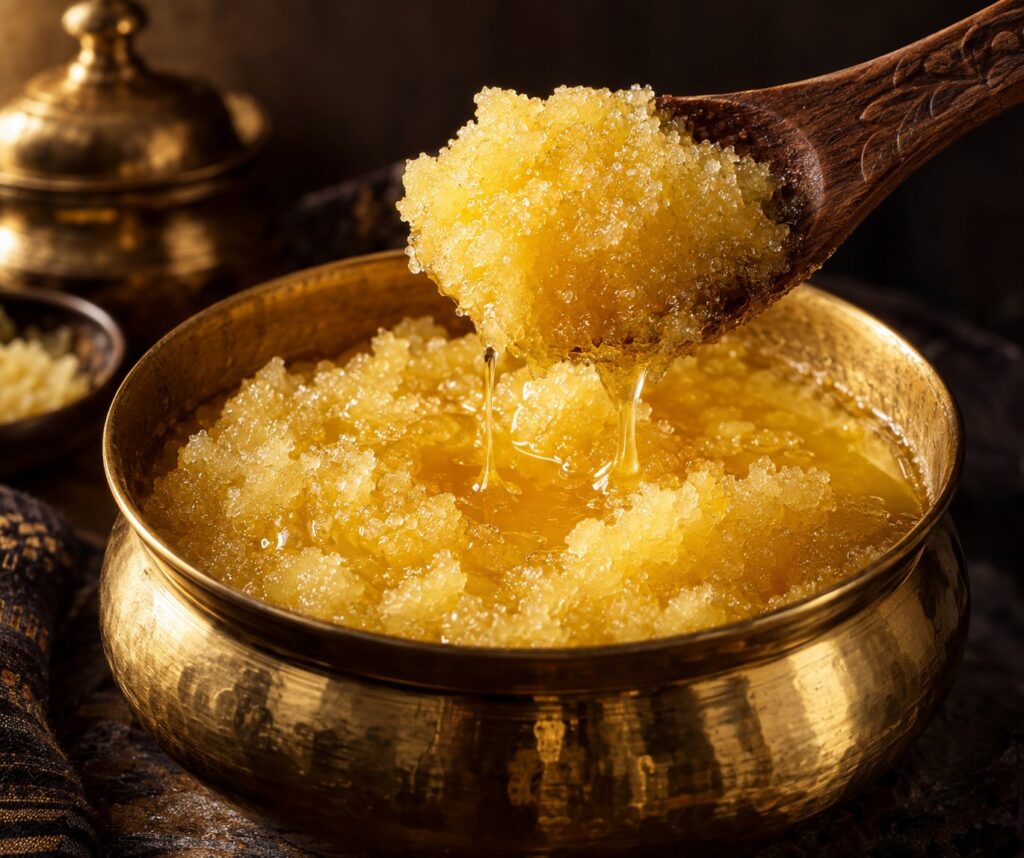
Editorial illustration; not a documentary photograph of a specific 24 KARAT farm or batch.
IN THIS JOURNAL
01 Milk fat does not set all at once
03 Storage changes the picture again
One jar can look smooth on a warm afternoon and firmer the following morning. Another may develop visible grains as it cools. These changes are part of understanding milk fat, rather than a reason to judge every jar by one fixed photograph. Texture is a sensory characteristic worth noticing, but it needs context: temperature, cooling history and the condition of the product all matter.
01
Milk fat does not set all at once
Ghee contains a mixture of fat components that soften and crystallise differently. As the product cools, crystals form within the fat. How those crystals develop helps determine whether the finished ghee looks fine-grained, coarse-grained, smooth or partly liquid. There is no single visual texture that every genuine jar must keep in every kitchen. The same product can behave differently in a cool cupboard and beside a warm stove.
02
Cooling shapes the grain
The cooling rate and handling of the ghee influence crystal size and distribution. Faster cooling and stirring can give a more uniform appearance; other cooling conditions can encourage larger grains. This is why danedar texture is a description of the set, rather than a standalone test of the milk source or production method. A photograph of attractive grain cannot establish that the whole-curd bilona pathway was followed.
03
Storage changes the picture again
Warmth can soften or melt a set jar. Cold can make it hard to spoon. A liquid layer and a firmer layer can also appear as different components respond to the storage conditions. Before comparing two jars, consider whether they have been kept at similar temperatures. Repeatedly heating and cooling a jar simply to recreate a photograph is unnecessary for normal use; follow its storage directions and take out the amount you need.
04
Know the limits of appearance
Smooth ghee is not automatically fake, and grainy ghee is not automatically pure. Grain size also cannot reliably identify cow versus buffalo milk. For questions about composition, use the ingredient declaration, batch details and relevant analysis. For a particular jar that seems abnormal, explain what changed rather than trying to force it into a rule such as “large grains always mean quality.”
05
Notice condition as well as texture
Temperature-related setting is different from an off smell, visible contamination or a compromised seal. If the product seems off, do not treat the concern as harmless texture variation. Keep the batch information and ask the team to check it. For ordinary cooking, the texture becomes less important once the ghee melts in the pan: choose it for the dish, use the amount required and let the cooking method guide you.
TAKE IT INTO THE KITCHEN
A few things to remember
- Compare jars at similar storage temperatures.
- Treat grain and firmness as observations, not proof.
- Report abnormal condition with batch and storage details.
KEEP EXPLORING
The next page in the journal.
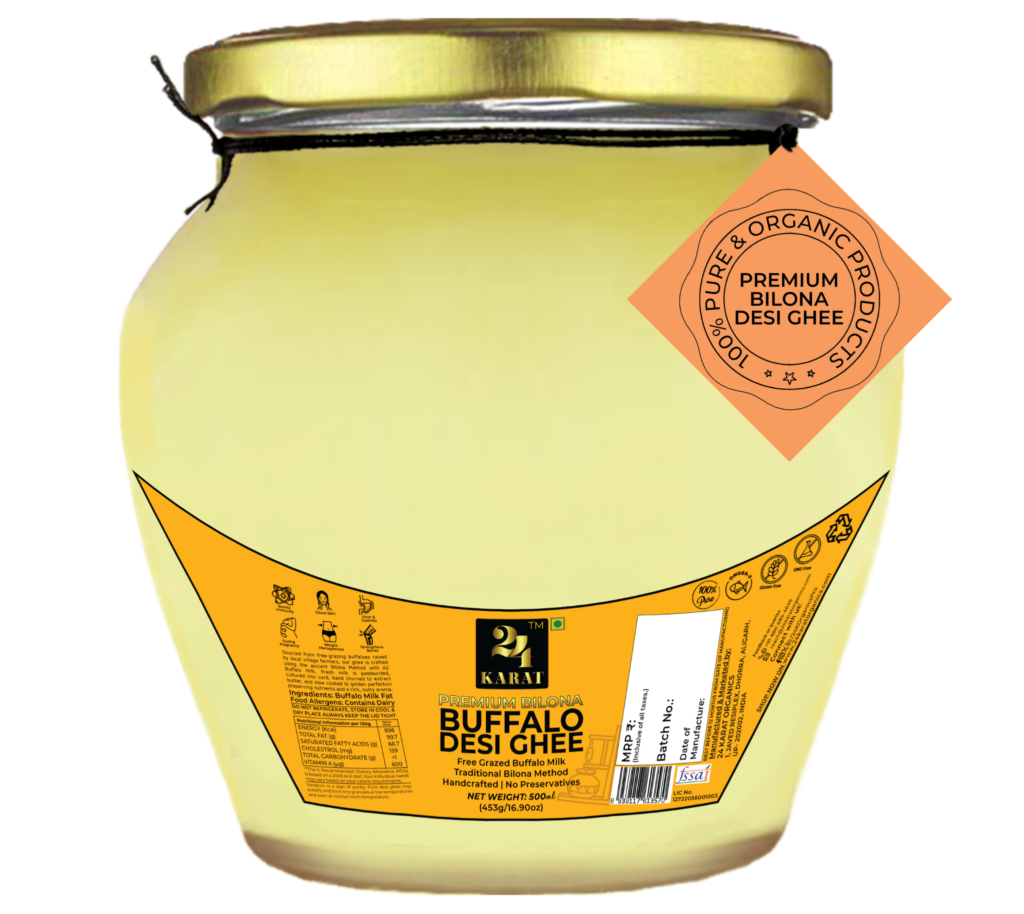
Why Buffalo Ghee Can Be White or Ivory
Understand the pale colour of buffalo ghee, how melting changes its appearance and why colour is not a reliable shortcut for judging purity.
Reading Ghee Nutrition Information Without the Hype
Learn how to compare ghee nutrition panels, serving sizes and general composition without inventing vitamin values or health promises.
Ghee Traceability: What a Batch Record Can Tell You
Understand ghee traceability, batch records and the questions that connect a finished jar to its ingredients, process and supporting information.
THE CRAFT BEHIND THE JAR
Keep the questions clear.
Explore the complete bilona process or find a straight answer in our FAQ collection.