
Kitchen knowledge
Reading Ghee Nutrition Information Without the Hype
Learn how to compare ghee nutrition panels, serving sizes and general composition without inventing vitamin values or health promises.
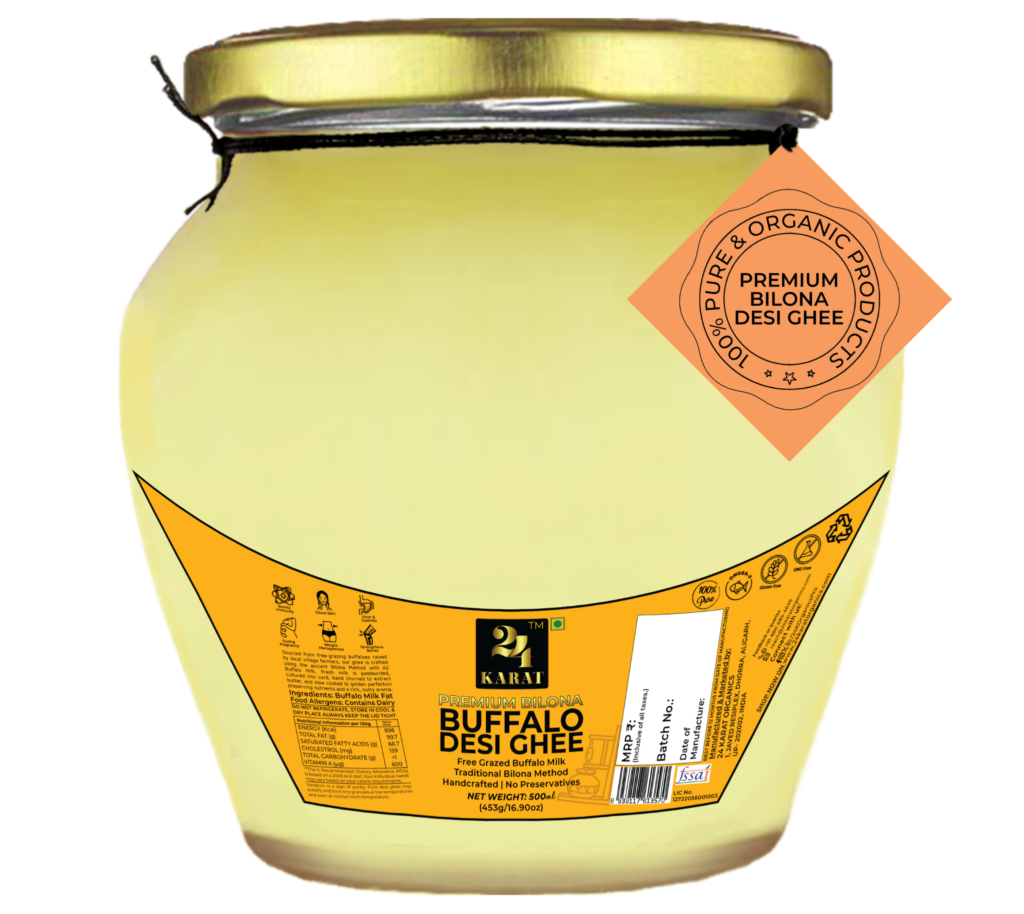
24 KARAT product image
IN THIS JOURNAL
01 Start with the reference amount
02 Understand the main composition
03 Keep vitamin statements specific
Nutrition information is most useful when it is read on a consistent basis. Ghee is concentrated milk fat, and its place in a meal depends on the amount used and the rest of the food. A nutrition panel can help describe that amount. It should not be replaced by a colour judgement, a production slogan or a promise of a particular health result.
01
Start with the reference amount
Check whether the panel gives values per 100 g, per serving or on another declared basis. Two numbers cannot be compared fairly if they refer to different amounts. A suggested serving also needs a clear size: a casual spoonful is not necessarily the same as the measured serving on a label. Begin with the stated unit and quantity before drawing conclusions from the figures.
02
Understand the main composition
Clarification removes most water and milk solids, leaving a product that is primarily milk fat. That makes ghee energy-dense rather than a source of substantial protein. Fat is the central part of the panel, with saturated fat and other declared components needing to be read as shown. The production route can describe the food’s identity and flavour, but it does not remove the need to consider the amount used.
03
Keep vitamin statements specific
Naturally occurring fat-soluble vitamin amounts can vary with milk, feed and season. A pale appearance does not establish that a jar has no vitamin A, while a yellow appearance cannot establish a precise vitamin level. Use the current nutrition information or a relevant analysis for numerical statements. Avoid transferring an attractive figure from another product or a general reference directly onto your own jar.
04
Do not turn clarification into an allergy guarantee
Most milk solids are removed during clarification, but that description should not be represented as certified absence of every milk protein or all lactose. Ghee remains dairy-derived. Read the allergen declaration and obtain appropriate advice for a personal milk-allergy concern rather than relying on a general FAQ or an A2 statement about the milk source.
05
Bring the information back to the recipe
A recipe gives you a measured starting point for cooking, not a universal dietary allowance. Adjusting the amount for the dish and household preference is different from promising that ghee will treat a condition or deliver weight loss. If you have an individual dietary requirement, use your own qualified professional’s guidance. For ordinary comparisons, consistent units and the current product label are more useful than hype.
TAKE IT INTO THE KITCHEN
A few things to remember
- Compare panels using the same reference amount.
- Use product-specific values for numerical claims.
- Keep personal dietary and allergy questions separate from marketing language.
KEEP EXPLORING
The next page in the journal.
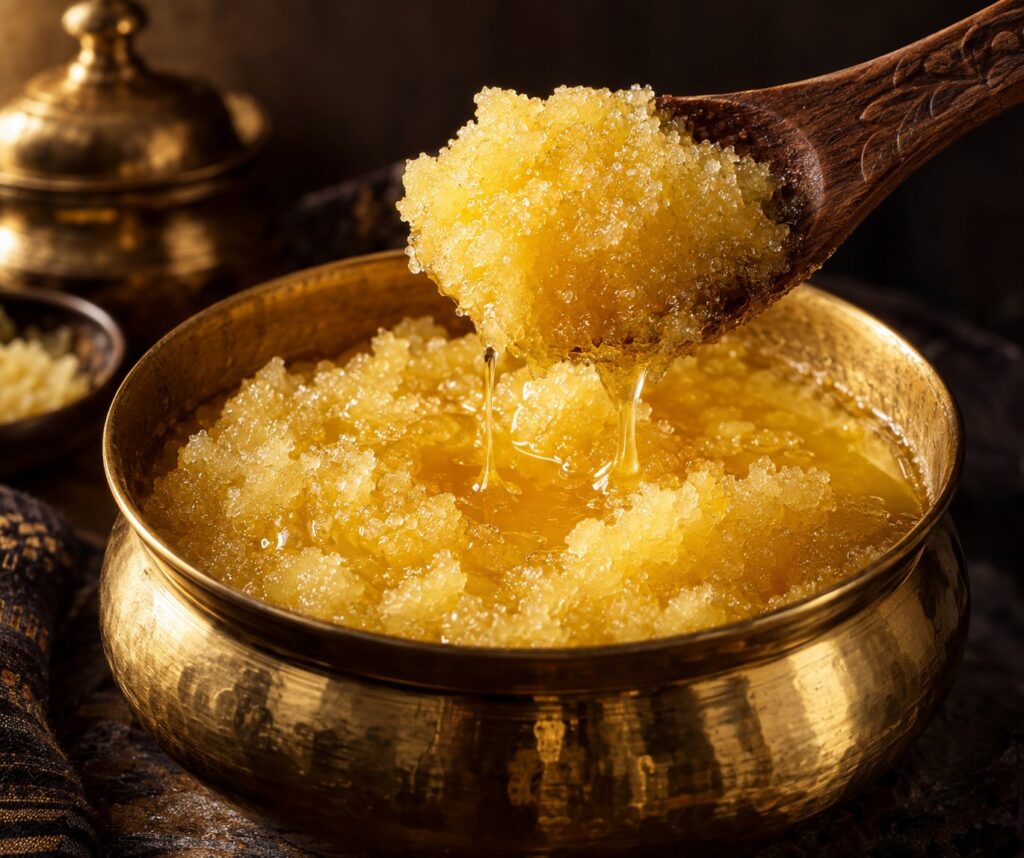
Why Ghee Turns Grainy, Smooth or Liquid with Temperature
Learn why ghee texture changes with cooling and storage temperature, and why grain, firmness or melting alone cannot prove purity.
Why Buffalo Ghee Can Be White or Ivory
Understand the pale colour of buffalo ghee, how melting changes its appearance and why colour is not a reliable shortcut for judging purity.
Ghee Traceability: What a Batch Record Can Tell You
Understand ghee traceability, batch records and the questions that connect a finished jar to its ingredients, process and supporting information.
THE CRAFT BEHIND THE JAR
Keep the questions clear.
Explore the complete bilona process or find a straight answer in our FAQ collection.