
Sourcing & records
Ghee Traceability: What a Batch Record Can Tell You
Understand ghee traceability, batch records and the questions that connect a finished jar to its ingredients, process and supporting information.
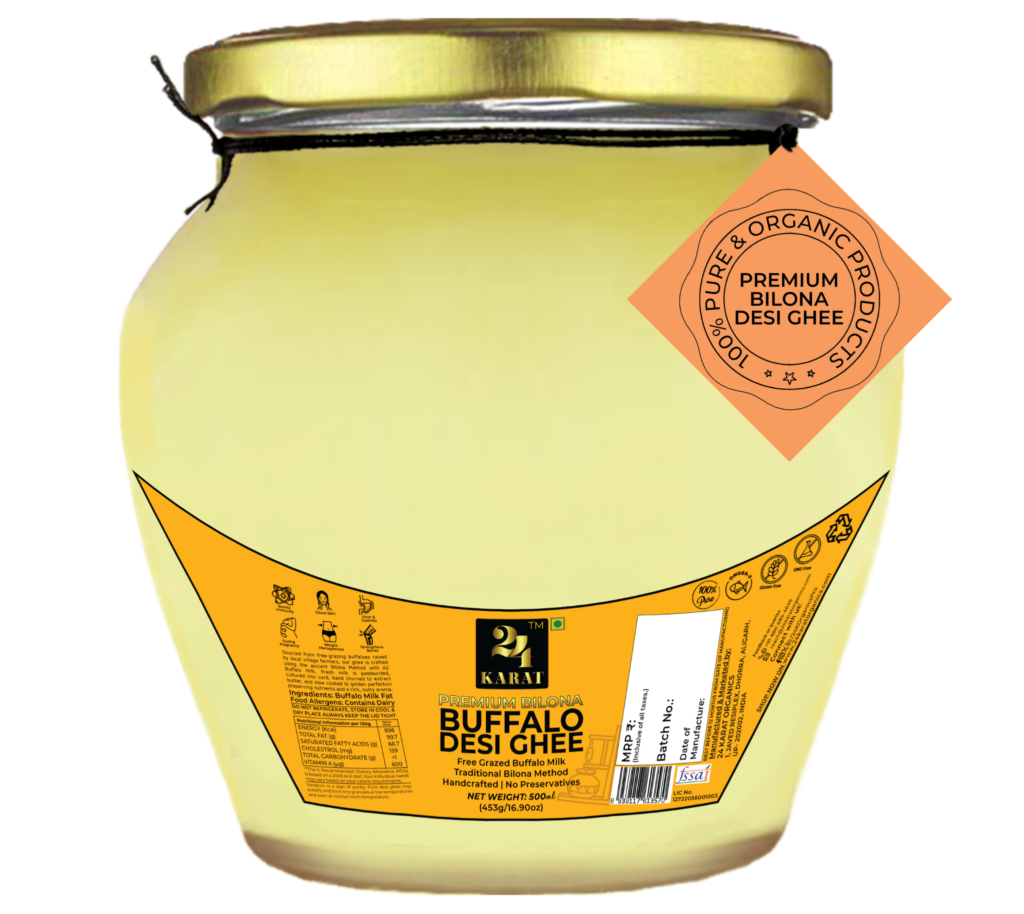
24 KARAT product image
IN THIS JOURNAL
01 Start with the jar in your hand
02 Separate the different records
03 Follow the link between stages
A jar is the last visible stage of a much longer route. Before it reaches a kitchen, milk has been collected, cultured, churned, clarified and packed. Traceability is the connection between that finished product and the records behind those stages. It is useful because it gives a specific question somewhere to go: which product, which batch, and which information relates to it?
01
Start with the jar in your hand
Begin with the product name, pack size and batch or lot code. Add the manufacturing or packing information and best-before details shown on the label. These identifiers help distinguish your jar from a photograph of another product or a document prepared for another lot. Keep the order reference too if you bought online. A clear photograph of the label is often more useful than a general description such as “the large jar I ordered last month.”
02
Separate the different records
Sourcing information, production records, a nutrition panel and a laboratory report serve different purposes. A sourcing statement describes the starting material. A process record concerns what was done. A nutrition panel describes declared composition, while a laboratory report concerns the sample and parameters actually tested. A good question identifies which of these you need, rather than expecting one document to prove every aspect of a brand story.
03
Follow the link between stages
The valuable part of a record is its connection to the product. Ask whether the available information can be matched to the declared milk source, the production batch and the packed lot. Not every internal record is a public document, and different businesses organise records differently. What matters to a consumer is receiving a clear explanation of what can be identified and what the evidence does, and does not, cover.
04
Use traceability when something changes
If a jar arrives damaged or seems different from an earlier purchase, retain the batch and order details and describe the actual observation. Was it firmer, more aromatic or a different shade? When was it opened and how was it stored? Those details help separate normal sensory variation from a specific concern. Traceability supports a useful investigation; the existence of a code alone does not establish that a product is pure or suitable for every person.
05
Make it a habit, not a badge
You do not need to turn every meal into an audit. A brief label check and a saved order reference are practical habits. When a producer makes a claim, ask for the record relevant to that claim and the batch in question. Clear, proportionate information is more useful than collecting an impressive pile of unrelated certificates. The aim is an understandable connection between what you bought and the information offered about it.
TAKE IT INTO THE KITCHEN
A few things to remember
- Record the product, batch code and order reference.
- Ask which document answers your particular question.
- Check that any report or record relates to the relevant product and lot.
KEEP EXPLORING
The next page in the journal.

From Milk Collection to Curd: Questions Worth Asking
Explore the practical questions behind milk collection, clean handling and preparation for curd without confusing farm imagery with evidence.
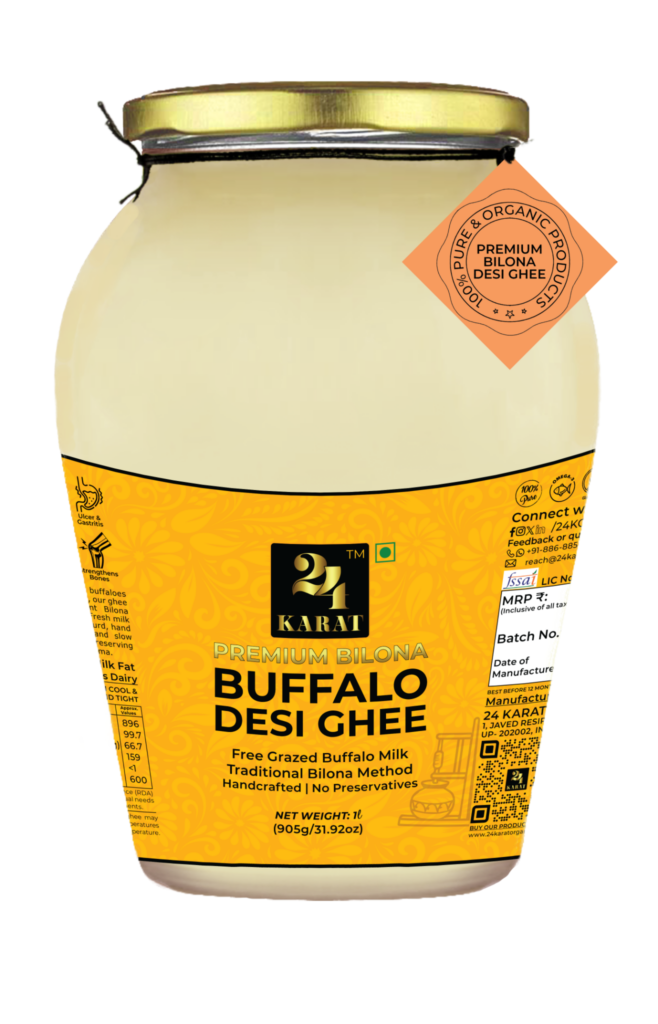
How to Read a Ghee Label Before Opening the Jar
A practical guide to reading a ghee label: ingredients, net quantity, batch details, dates, storage directions and the questions to ask next.
What to Look for in a Ghee Laboratory Report
Learn how to match a ghee laboratory report to a product and batch, read its test scope and avoid treating one result as proof of every claim.
THE CRAFT BEHIND THE JAR
Keep the questions clear.
Explore the complete bilona process or find a straight answer in our FAQ collection.