
Sourcing & records
How to Read a Ghee Label Before Opening the Jar
A practical guide to reading a ghee label: ingredients, net quantity, batch details, dates, storage directions and the questions to ask next.
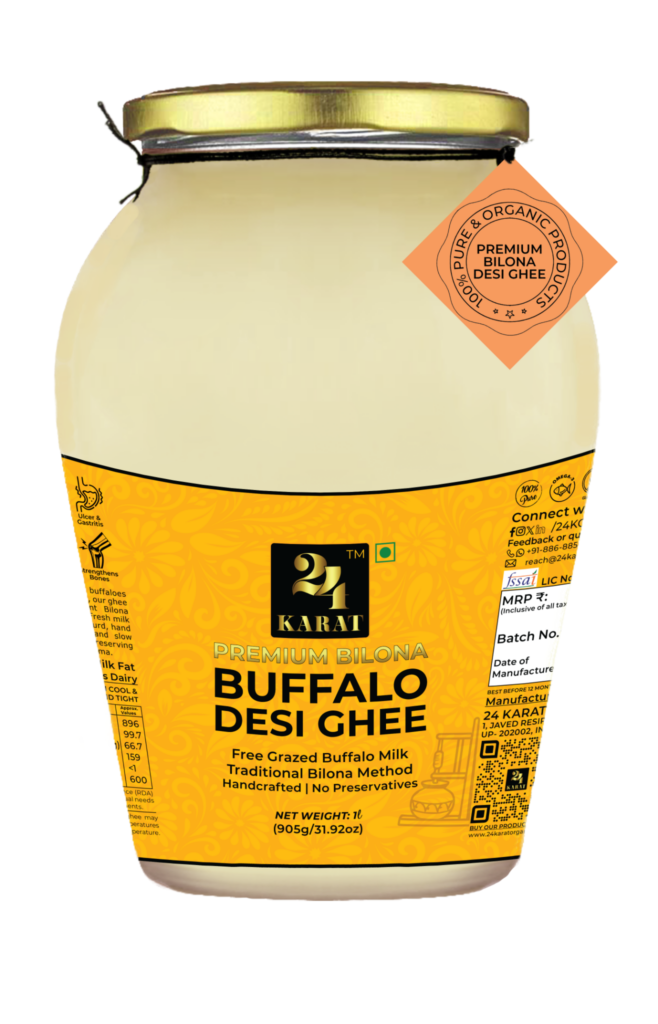
24 KARAT product image
IN THIS JOURNAL
01 Confirm the product and ingredients
02 Read the quantity in its own unit
03 Find the batch and date information
The label is the most accessible piece of information that travels with a jar. Reading it takes less time than comparing a long list of advertising claims, and it gives you the product identifiers needed for more specific questions. Start with what is actually declared, then separate that information from what still needs explanation or supporting evidence.
01
Confirm the product and ingredients
Check the product name and the ingredient declaration. Look for the stated milk source where it is provided, and distinguish a single-source product from one described as a blend. Terms such as bilona, Murrah, A2 and organic do not mean the same thing. A method or breed term should not be treated as proof of a separate certification simply because the words appear close together.
02
Read the quantity in its own unit
Net weight and volume are different measurements. Compare like with like rather than judging value only by the apparent height of the fill in a photograph. Temperature and the physical state of ghee can change how a jar looks. If a particular pack appears incorrectly filled or labelled, use the declared quantity and batch information when asking the team to check it.
03
Find the batch and date information
Locate the batch or lot code, the manufacturing or packing information supplied, and the best-before guidance. These are useful when you want information about freshness or need to report a concern. Do not replace the actual pack directions with a universal shelf-life number copied from an unrelated website or a different product. The current label belongs to the jar you have.
04
Read storage and nutrition together
Storage directions tell you how the producer intends the product to be handled. The nutrition panel describes values on its stated basis, such as per 100 g or per serving. Check that basis before comparing two panels. A general claim about natural vitamins or concentrated milk fat is not an exact analysis of every jar, so use the declared values for the product rather than assuming a fixed amount.
05
Use the label to ask a better question
A label is a starting point, not proof of every quality or health statement. For certifications, ask what applies to the current product. For a laboratory report, match the product and lot details. For a delivery or quality concern, keep the order reference alongside a clear label photo. That small habit makes the conversation specific and reduces confusion between similar pack sizes or older images.
TAKE IT INTO THE KITCHEN
A few things to remember
- Read ingredients and the declared quantity before comparing claims.
- Save a clear photograph of the batch/date area.
- Use the current pack directions for your particular jar.
KEEP EXPLORING
The next page in the journal.
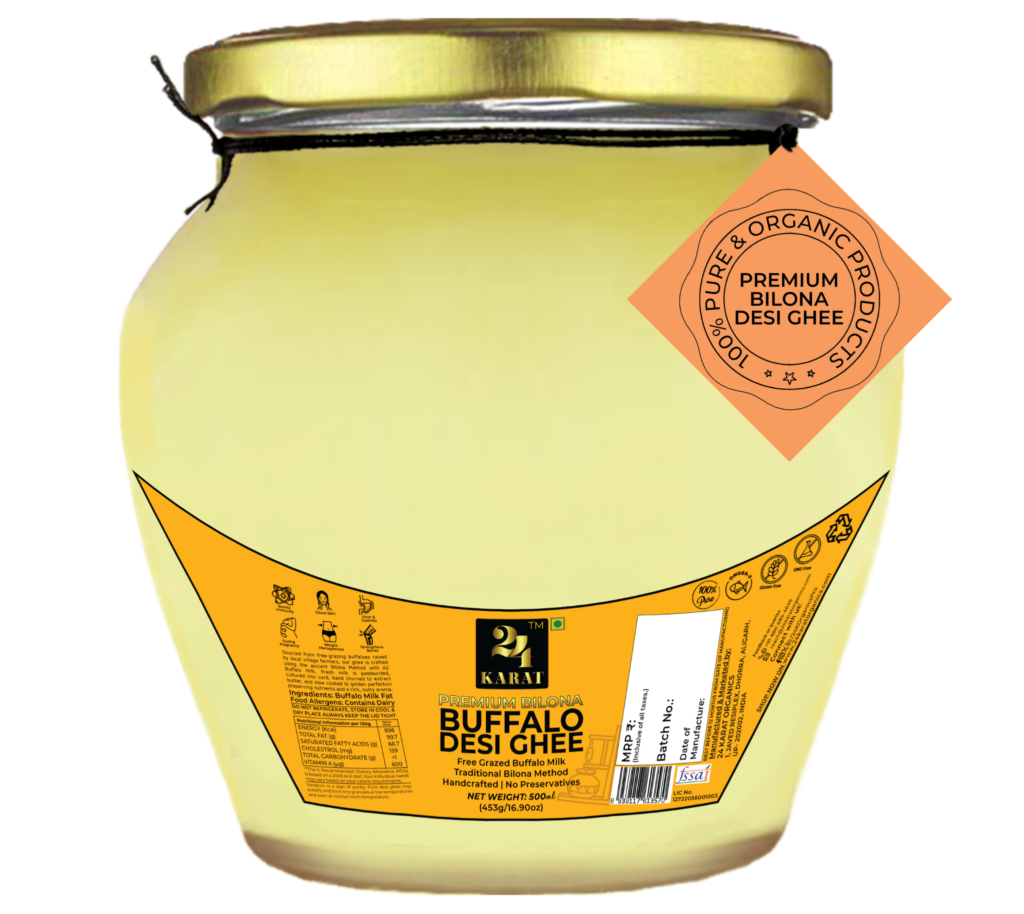
Ghee Traceability: What a Batch Record Can Tell You
Understand ghee traceability, batch records and the questions that connect a finished jar to its ingredients, process and supporting information.

From Milk Collection to Curd: Questions Worth Asking
Explore the practical questions behind milk collection, clean handling and preparation for curd without confusing farm imagery with evidence.
What to Look for in a Ghee Laboratory Report
Learn how to match a ghee laboratory report to a product and batch, read its test scope and avoid treating one result as proof of every claim.
THE CRAFT BEHIND THE JAR
Keep the questions clear.
Explore the complete bilona process or find a straight answer in our FAQ collection.