
WHY IT WORKS
Cultured first.
Rich by nature.
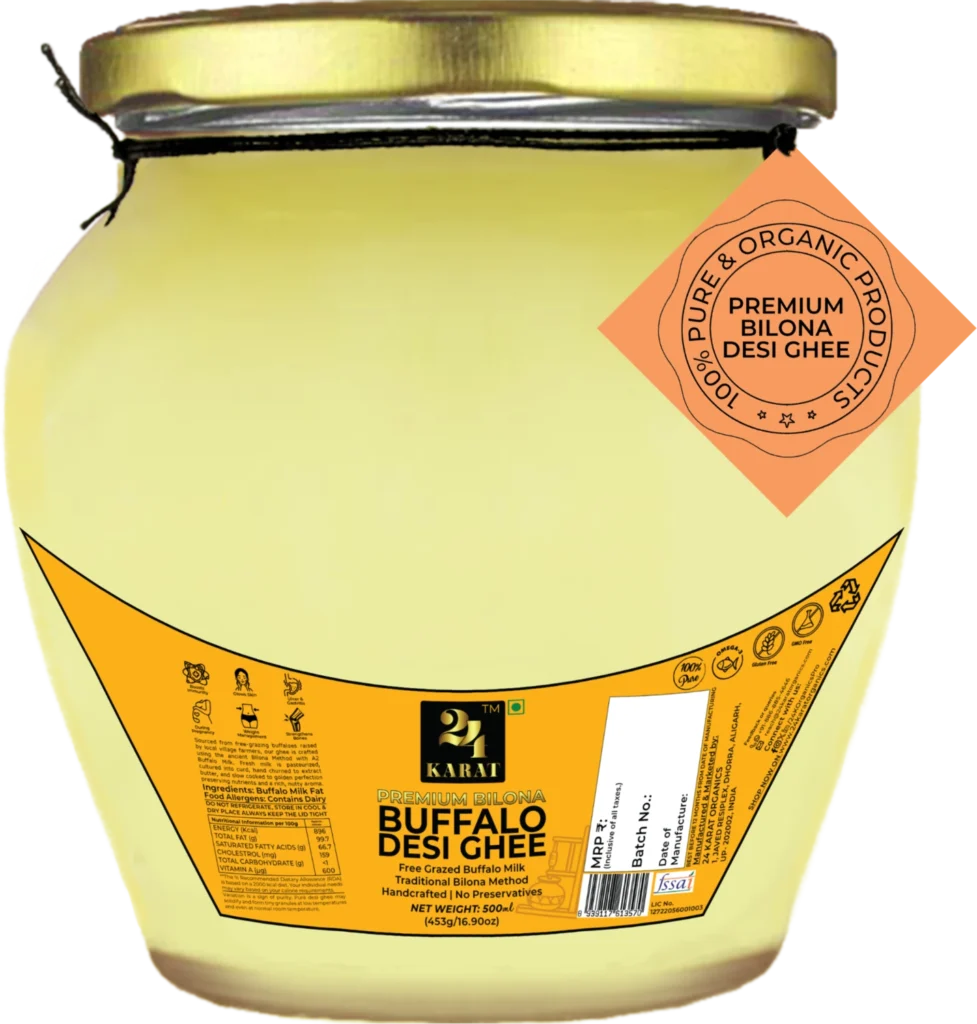
24 KARAT starts with Murrah buffalo milk, sets it into dahi and churns the whole curd into makhan. Slow clarification brings out the cultured, nutty character you taste in the finished ghee.
THE CURD-FIRST DIFFERENCE
Flavour starts before the simmer.
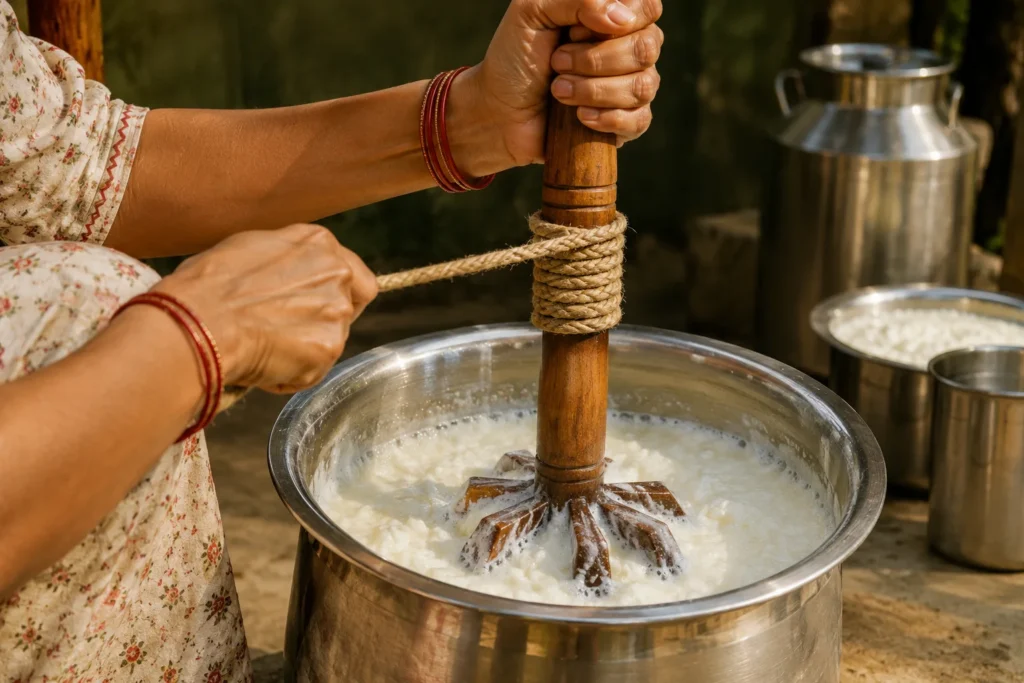
Our milk is pasteurised, cooled and set into thick dahi with a curd starter. We churn that whole set curd in small batches, collect the cultured butter and slow-simmer it into ghee. Each stage helps shape its flavour and character.
01
Whole curd, not collected malai
Fermentation develops the cultured starting point for our butter. We churn the entire dahi rather than making ghee from a layer of cream collected off milk. That curd-to-butter pathway defines bilona.
02
The makhan in the middle
Churning brings the milk fat together as makhan while buttermilk, or chaas, separates. This cultured butter is the link between the curd we set and the ghee we finish.
03
Aroma developed by simmering
During clarification, moisture evaporates and the milk solids develop toasted, nutty notes. The ghee is then cooled, filtered and packed. Culturing and slow simmering both contribute to its characteristic aroma.
THE BUFFALO GHEE DIFFERENCE
Pale in the jar. Rich at the table.
01
Murrah milk, a rich starting point
Murrah buffalo milk is the starting point for our ghee. Buffalo ghee is known for its rich mouthfeel and full dairy character. Cow and buffalo ghee offer different sensory experiences; the choice is a matter of preference.
02
White or ivory is natural
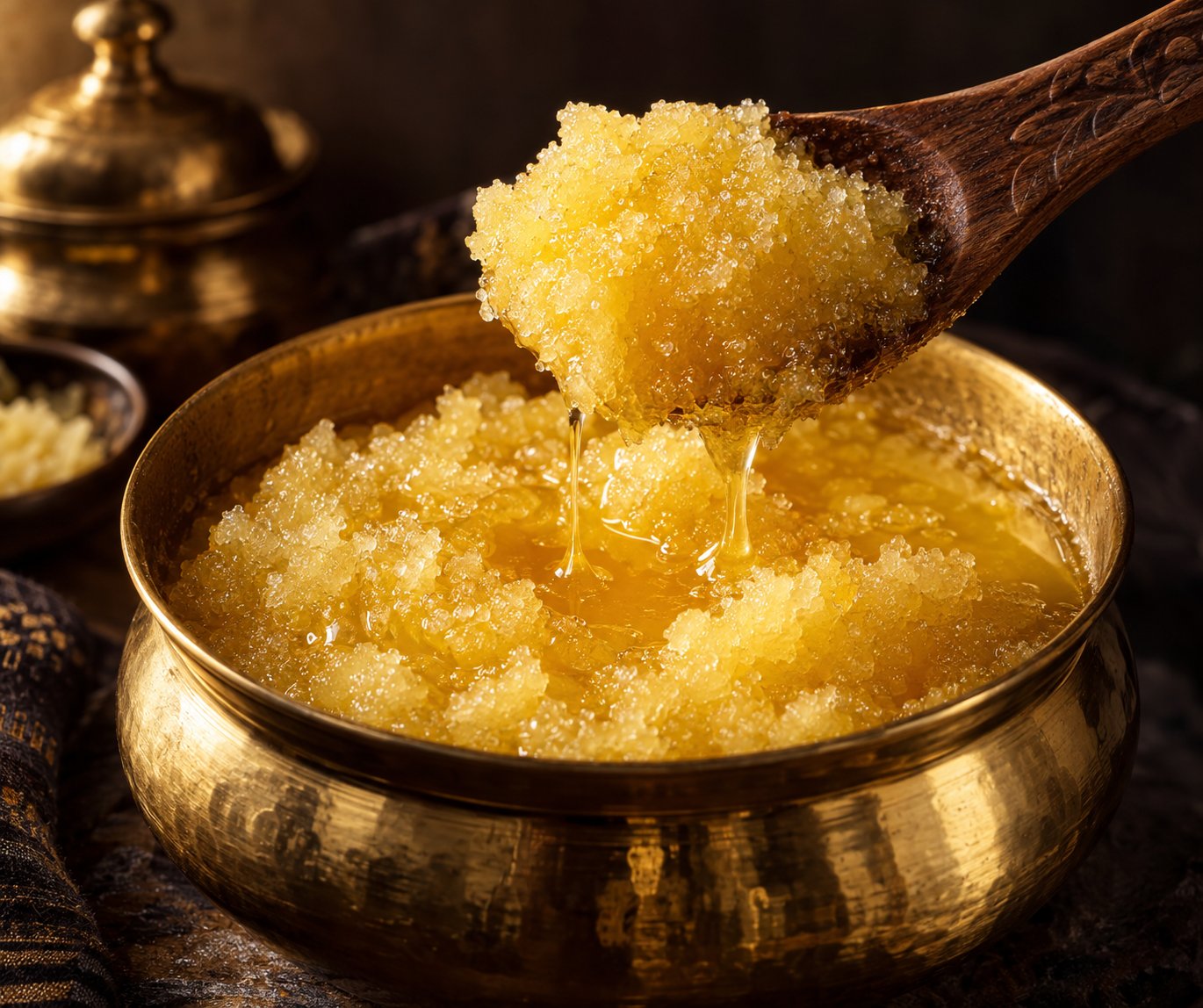
Buffalo milk fat is naturally low in the yellow pigment beta-carotene, so its ghee can look pale or ivory when set and clearer when melted. Colour alone does not establish purity or nutritional quality.
03
Danedar grain comes from cooling
Milk fat crystallises as it cools. Cooling rate, storage temperature and the fat composition influence grain size and firmness. A grainy, smooth or partly liquid jar can reflect normal temperature-related changes rather than a different ingredient.
WHAT REACHES YOUR KITCHEN
Clarified milk fat. A clear purpose.
Clarification separates most of the water and milk solids from the butter. The result is concentrated milk fat with a place in everyday cooking. We add no preservatives; clean, dry handling helps protect the jar after opening.
01
A versatile cooking fat
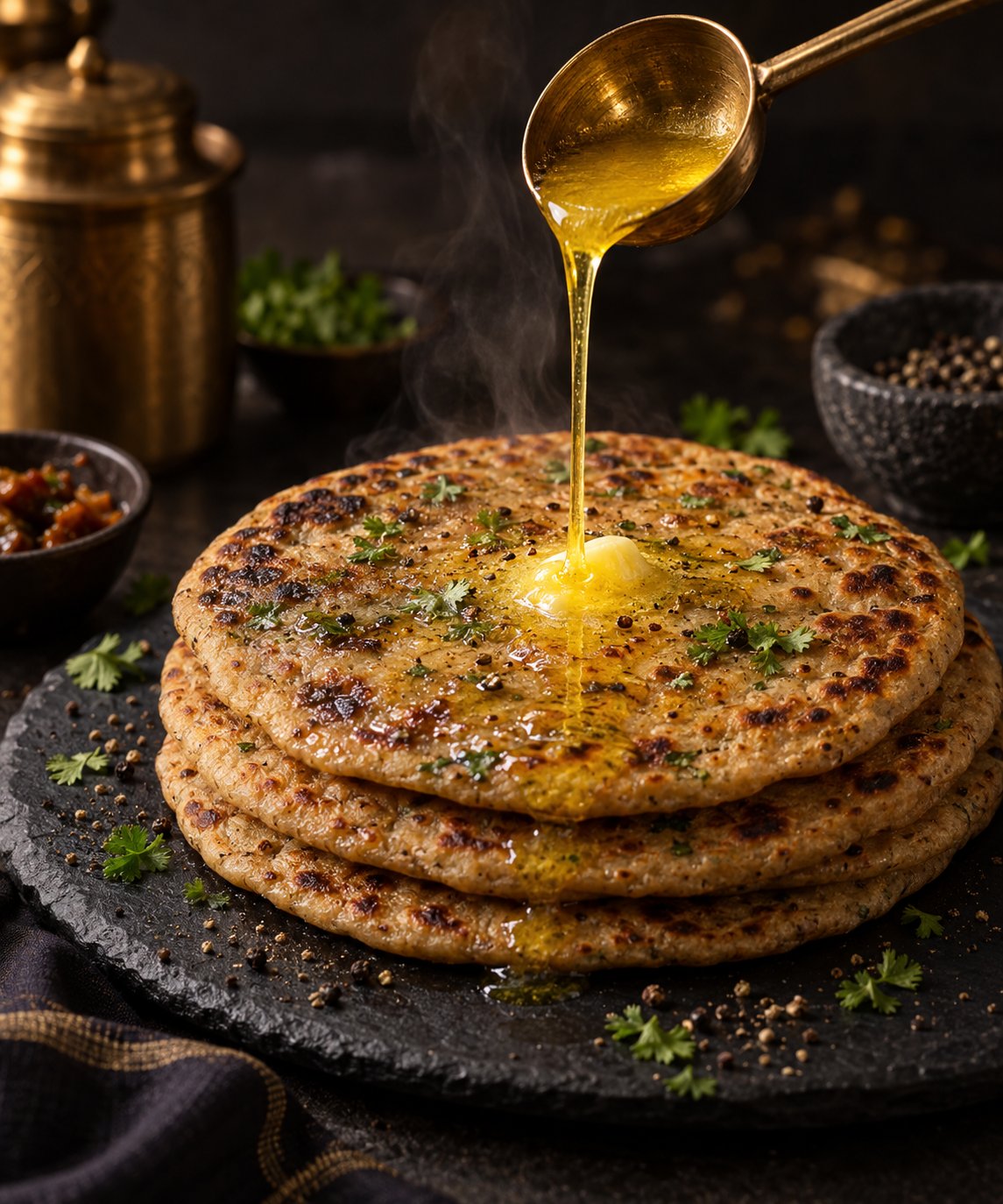
With most milk solids removed, ghee suits familiar uses such as tadka, sautéing, roasting and finishing hot rotis or dal. Start with the amount your recipe needs and avoid heating it until it smokes.
02
Nutrition belongs on the label
Ghee is energy-dense milk fat and contains saturated fat as well as other fatty acids. Naturally occurring fat-soluble vitamin amounts can vary with milk, feed and season. Use the current pack or batch analysis for exact nutrition figures.
03
Evidence beyond appearance
A pleasant aroma, pale colour or danedar grain cannot establish purity on its own. Check the ingredient declaration and batch details, then match any laboratory report to the product, lot, test date and parameters covered.
STRAIGHT ANSWERS
The questions behind the spoonful.
What do bilona, Murrah and A2 each mean?
Bilona describes the curd → butter → ghee pathway. Murrah names the buffalo breed. A2 describes a beta-casein protein type in the milk; it is not a health guarantee for the finished ghee. None of these terms establishes organic certification, which requires separate evidence.
Does grain or a strong aroma prove purity?
No. Grains arise from fat crystallisation, while culturing and clarification influence aroma. Both are sensory characteristics. Palm, fridge and spoon tests cannot conclusively verify composition or rule out adulteration; relevant laboratory analysis answers a different question.
How should I use it?
Try it on a warm roti, stir it into dal or khichdi, use it for tadka, or add it to roasted vegetables and traditional sweets. Its rich aroma can be enjoyed with a small amount. Choose portions that fit your recipe and usual eating pattern.
How do I store the jar?
Keep it tightly closed in a cool, dry place away from direct sunlight and nearby heat. Use a clean, dry spoon and keep water and food out. Follow the storage instructions and best-before date on your pack rather than a general shelf-life promise.
What should I know about its nutritional role?
Ghee is a concentrated, energy-dense cooking fat. It contains saturated fat, and precise nutrient amounts should come from the current label or batch analysis. The bilona method and traditional use do not establish weight-loss, therapeutic or guaranteed health benefits.
Can I choose a different pack size?
Yes. Our existing product pages let you choose among the available pack sizes and show the current price and stock for your selection. Choose a size you expect to use within the pack’s storage and best-before guidance.
Why does one batch look or smell different from another?
Season, animal feed, curd-culture activity, simmering and cooling can influence shade, aroma and firmness. Natural variation does not by itself prove either authenticity or adulteration; check the product information and relevant evidence.
How is this different from homemade malai ghee?
Malai ghee starts from collected cream; our bilona method starts by setting whole milk into curd and churning that dahi into butter. Carefully made malai ghee can also be genuine. The processes differ, and a process comparison alone does not establish that another product is impure.
Does it still contain milk allergens?
Ghee is dairy-derived. Clarification removes most milk solids, but traces of milk protein or lactose can remain. Do not treat it as certified allergen-free; check the current pack’s allergen declaration.
What should I look for in a lab report?
Check the laboratory identity, report date, product and batch reference, and which tests were performed. Moisture, milk-fat authenticity markers and tests for particular adulterants answer different questions. A report’s conclusions apply to the sample and scope tested; contact us with your jar’s batch details if you need documentation.
YOUR NEXT JAR
Choose the jar for your kitchen.
From a spoon over dal to the family’s next festive recipe, choose the pack size that fits how you cook. See current prices and availability on the product page.