
Everyday rituals
Cooking with Ghee: Tempering, Roasting and Finishing
Explore three practical ways to cook with ghee—tempering, roasting and finishing—and learn why controlled heat matters more than a smoke-point slogan.
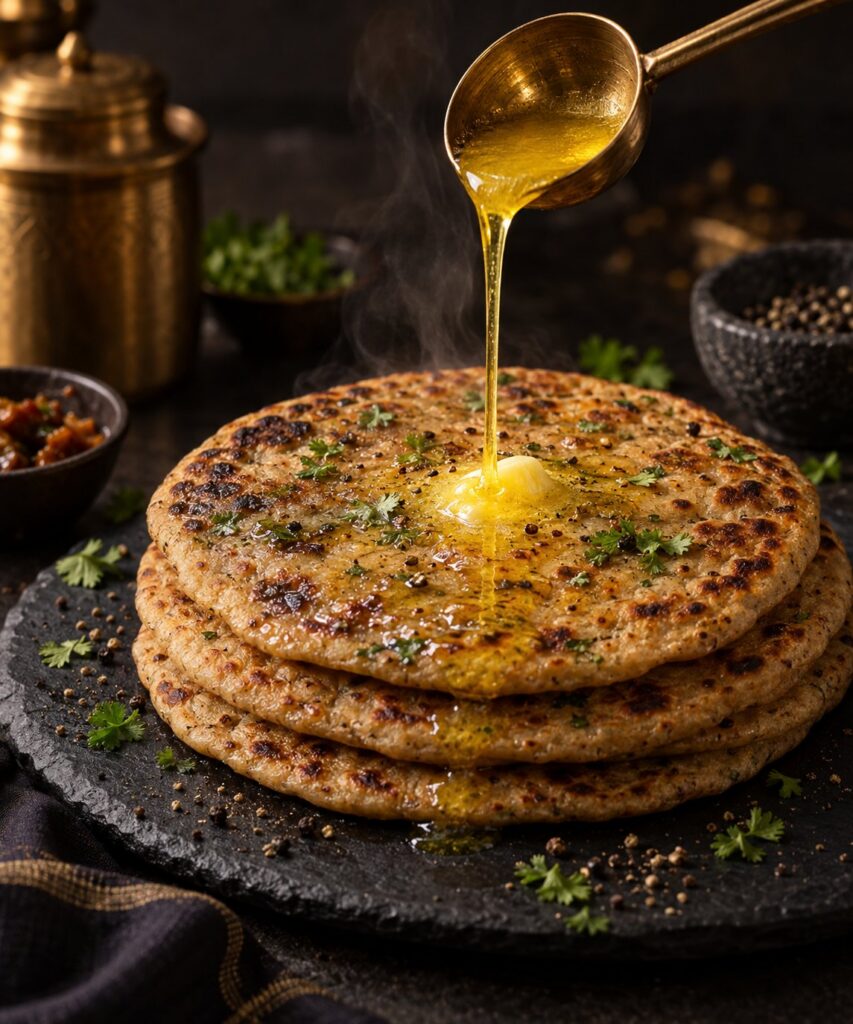
Editorial illustration; not a documentary photograph of a specific 24 KARAT farm or batch.
IN THIS JOURNAL
01 Use a small pan for a focused tempering
02 Coat evenly before roasting
03 Finish where the aroma will be noticed
The same jar can play different roles in a meal. It can carry cumin through a dal tempering, coat vegetables before roasting or melt over a hot roti at the table. Thinking about the role helps you choose the amount and the heat. It also makes recipe instructions more useful than treating ghee as an ingredient that should be added in the same way to everything.
01
Use a small pan for a focused tempering
For tadka, the ingredients change quickly. Have the cumin, garlic, chilli or curry leaves ready before warming the ghee. Let whole spices become fragrant, and watch garlic carefully as it colours. Ground spices often need only a brief moment and can scorch if left over strong heat. The point is to release and carry aroma, rather than heat the fat until it visibly smokes.
02
Coat evenly before roasting
For vegetables, melted ghee can help distribute a measured coating across the surface. Cut pieces to a similar size, season them and give them room on the tray. Crowding encourages steaming and makes even browning harder. Follow the recipe’s temperature and tenderness cues; different vegetables and ovens behave differently, so a browned edge is not the only check for whether the centre is ready.
03
Finish where the aroma will be noticed
A little ghee over hot rice, dal or roti can contribute aroma without another long cooking stage. Start with the recipe or a small amount and adjust for the food and your preference. A pronounced buffalo-ghee character may need a lighter hand in a delicate dish. More is not automatically better, and a finishing spoonful should not be described as a guaranteed health outcome.
04
Keep heat claims in context
Clarification removes most water and milk solids, changing ghee’s cooking behaviour compared with ordinary butter. That does not make indefinite heating or repeated reuse a good goal. If the fat smokes, reduce the heat or remove the pan as appropriate. Do not keep using fat that is burnt, off-smelling or otherwise degraded merely because a general smoke-point figure sounded impressive.
05
Let a complete recipe be the starting point
Measured ingredients and numbered steps give you a repeatable baseline. Once you understand the sequence, small changes in spices or finishing amount are easier to judge. Our recipe collection includes rice, dal, parathas, vegetables, snacks and sweets for that purpose. Keep cooking preference separate from claims about treating a condition, and use the current product label for the ingredient information that belongs to the jar.
TAKE IT INTO THE KITCHEN
A few things to remember
- Prepare tempering ingredients before heating the pan.
- Use the recipe’s amount, heat and doneness cues.
- Avoid smoking or degraded cooking fat.
KEEP EXPLORING
The next page in the journal.
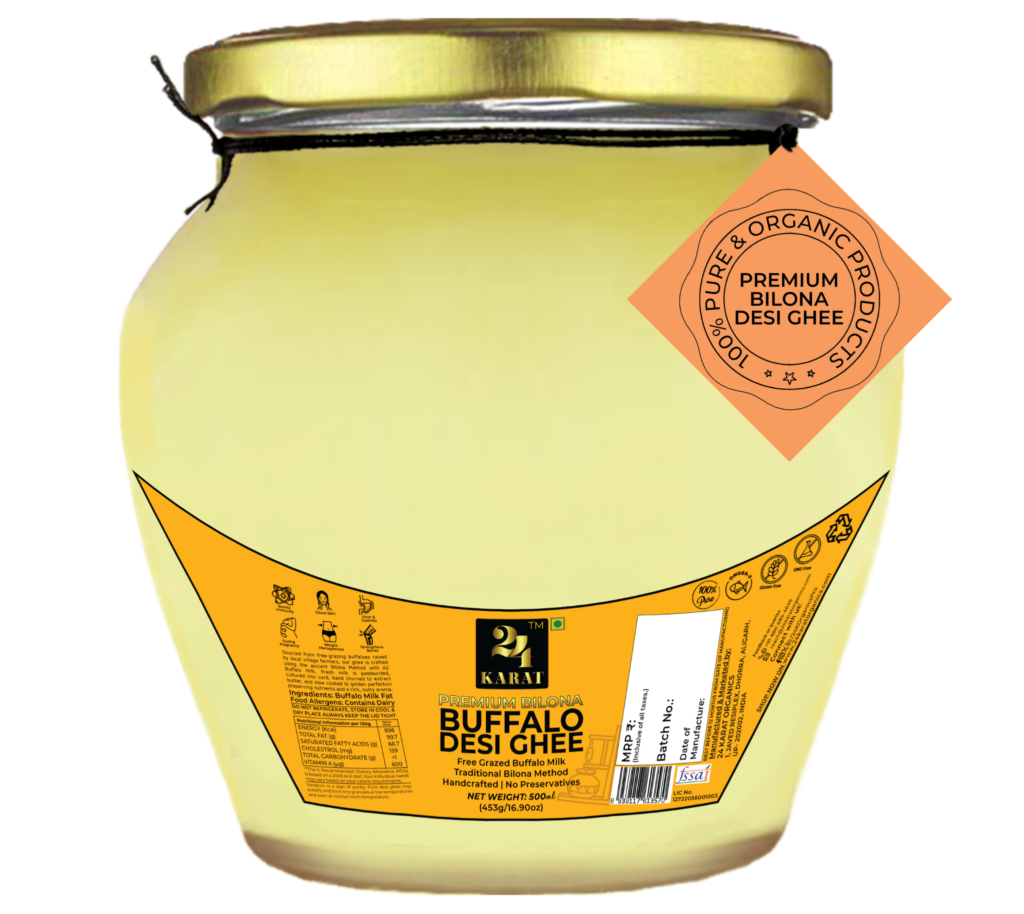
Storing Ghee at Home: The Small Habits That Matter
A practical guide to storing ghee: a closed lid, a cool dry place, clean utensils and the difference between texture changes and quality concerns.
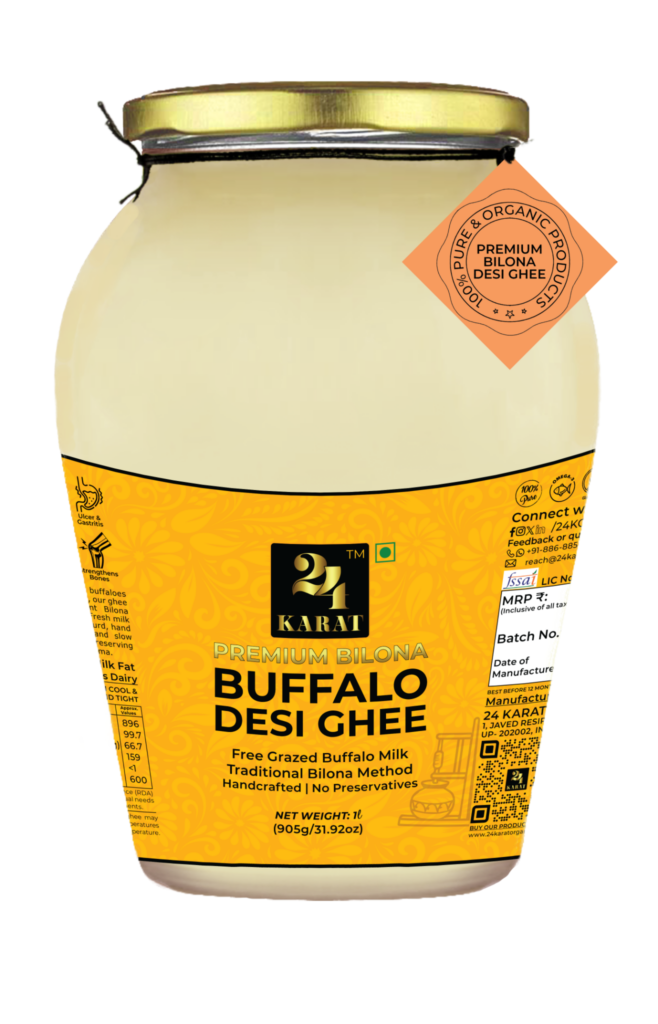
After the Last Spoonful: Reusing a Ghee Jar
Explore thoughtful ghee-jar reuse, why clean dry storage matters and why a reusable container is not proof of every environmental or product claim.
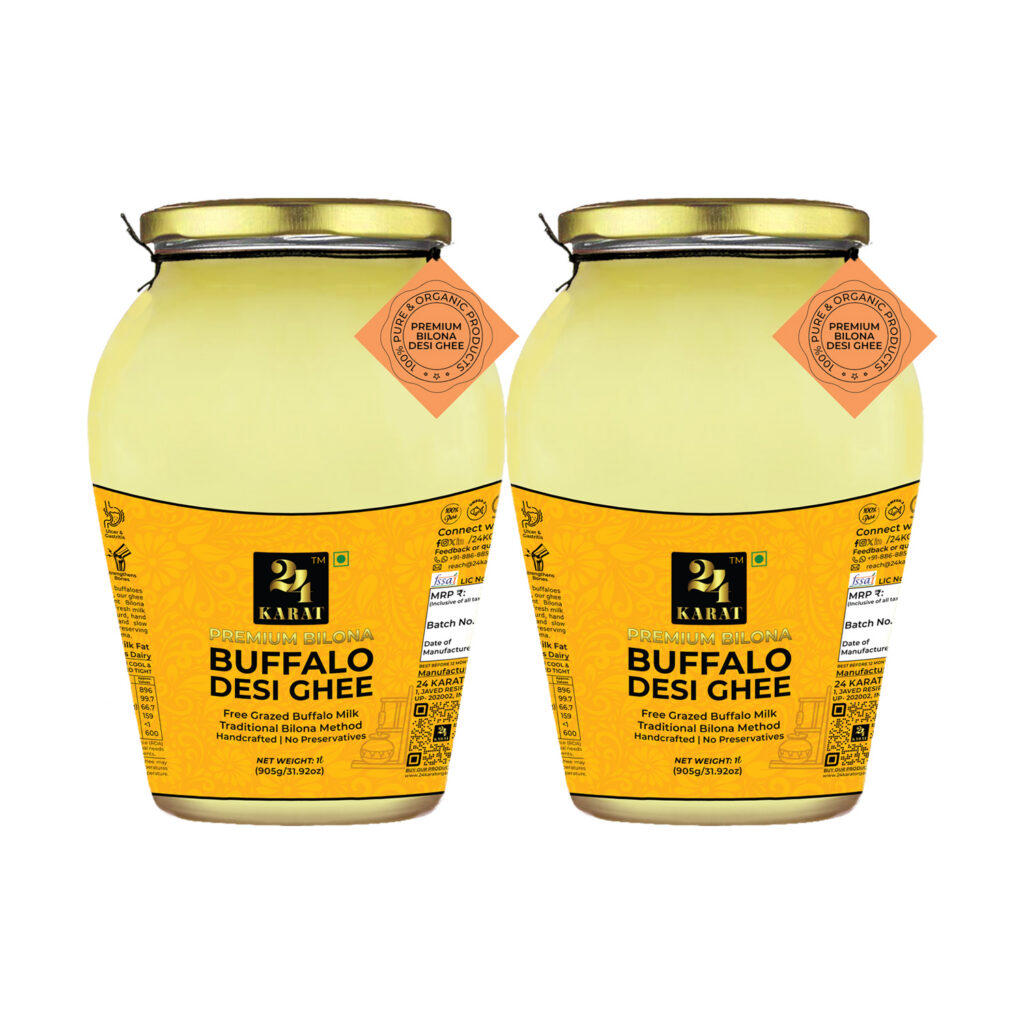
Choosing a Ghee Jar Size for the Way You Cook
Compare ghee pack sizes using household cooking habits, declared quantity and current unit value instead of assuming the largest jar is always best.
THE CRAFT BEHIND THE JAR
Keep the questions clear.
Explore the complete bilona process or find a straight answer in our FAQ collection.