
Everyday rituals
Storing Ghee at Home: The Small Habits That Matter
A practical guide to storing ghee: a closed lid, a cool dry place, clean utensils and the difference between texture changes and quality concerns.
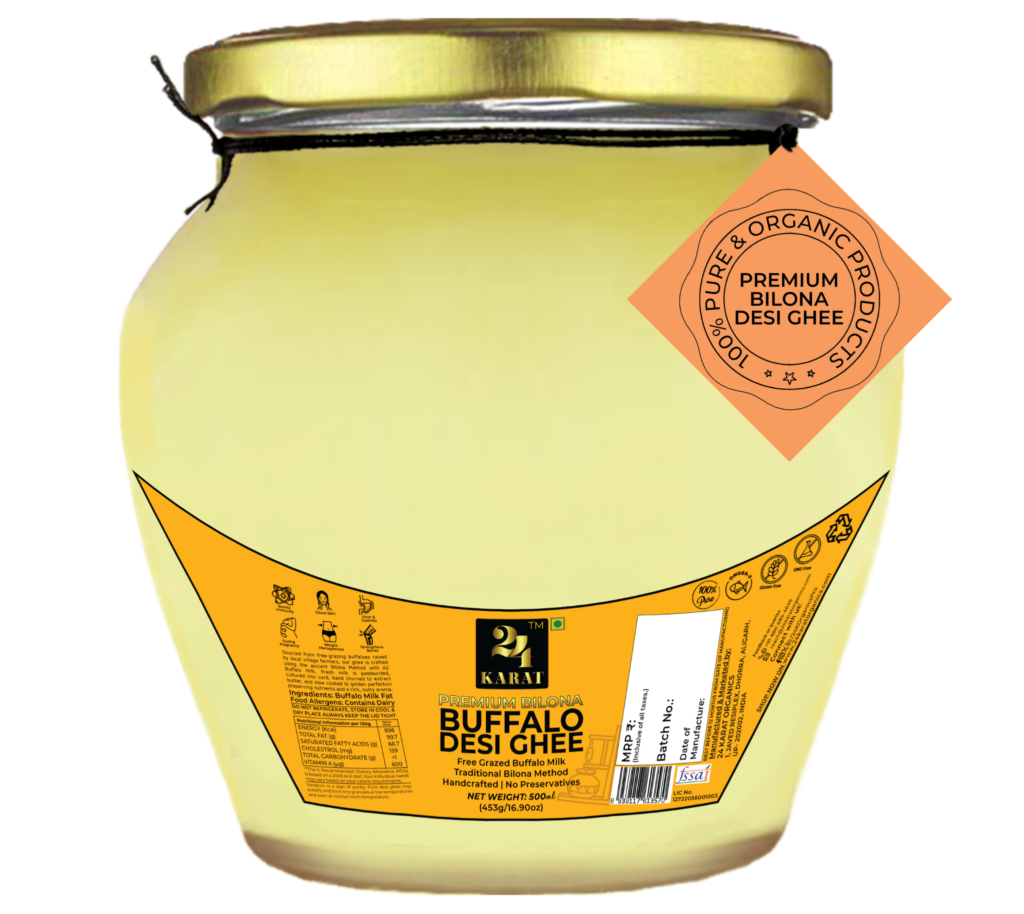
24 KARAT product image
IN THIS JOURNAL
01 Choose the place before opening
02 Keep the lid and spoon routine simple
03 Expect temperature-related setting
A good storage routine is simple enough to repeat every day. Keep the jar closed, use a clean dry utensil and follow the pack’s directions. These small habits matter because a product made with low moisture can still be affected by the way it is handled after opening. The kitchen routine is part of caring for the ingredient.
01
Choose the place before opening
A cool, dry storage spot away from direct sunlight and stove heat makes the jar easier to keep consistently. Avoid choosing a shelf only because it looks attractive in a photograph. The current pack directions are the reference for the product, including any date guidance. A small-batch description does not replace those instructions or establish one shelf life for every jar.
02
Keep the lid and spoon routine simple
Close the lid after use and avoid introducing water or food residues with a spoon. A utensil used in a steaming pan or a wet bowl should not go straight into the jar. Take out the amount you need with a clean dry spoon. Concentrated milk fat does not make careless handling irrelevant, and wiping a visibly dirty utensil on the edge of a jar is not the same as using a clean one.
03
Expect temperature-related setting
Ghee can harden in cold conditions and soften or melt in warmth. Refrigeration changes firmness and may alter texture; if the jar is refrigerated, keep it well closed to limit moisture and odour exposure. A temperature-related change does not on its own mean the product is spoiled. Follow the label rather than repeatedly moving the jar between extremes just to maintain a preferred texture.
04
Separate normal changes from concerns
Grain, softness and a partly liquid set need to be considered differently from visible mould, an abnormal off smell or a damaged seal. Do not taste a doubtful jar merely to prove that it is fine. Keep the relevant product and batch information and contact the team about the observation. Describing when it was opened and how it was stored makes that conversation more useful.
05
Buy an amount that suits the routine
The most convenient jar is one you can handle and use within the product guidance. Household size, cooking frequency and the amount added to each dish affect how quickly it is used. Choosing an appropriate size can make clean handling easier without assuming that a larger pack is always the best option. The daily habit matters more than recreating a perfect pantry photograph.
TAKE IT INTO THE KITCHEN
A few things to remember
- Keep the lid closed and use a clean dry spoon.
- Follow the actual pack’s date and storage guidance.
- Report an abnormal jar with batch, opening and storage details.
KEEP EXPLORING
The next page in the journal.

Cooking with Ghee: Tempering, Roasting and Finishing
Explore three practical ways to cook with ghee—tempering, roasting and finishing—and learn why controlled heat matters more than a smoke-point slogan.
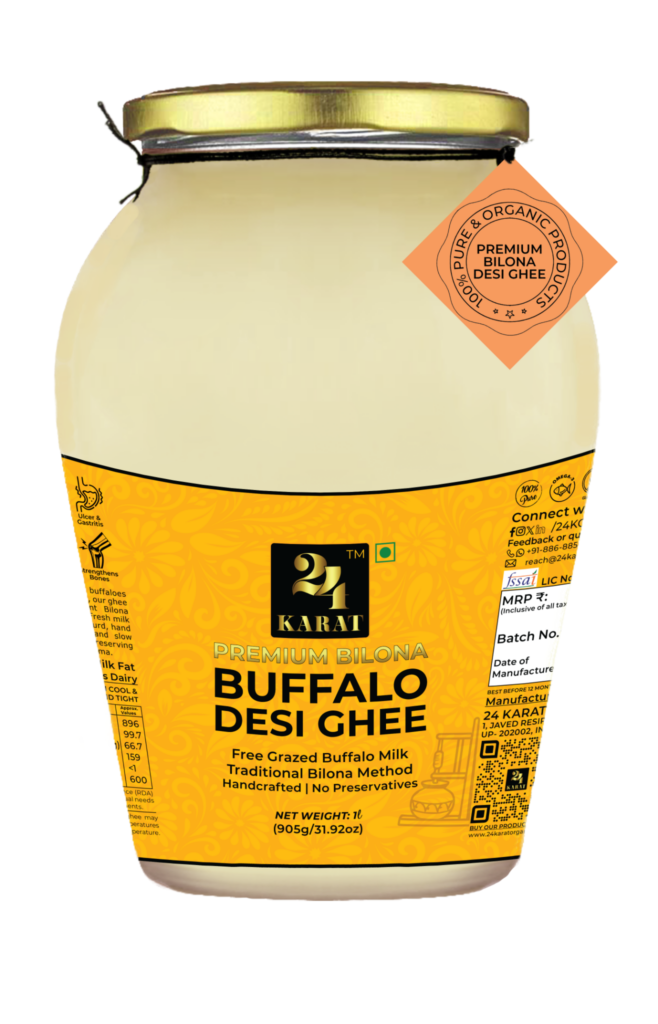
After the Last Spoonful: Reusing a Ghee Jar
Explore thoughtful ghee-jar reuse, why clean dry storage matters and why a reusable container is not proof of every environmental or product claim.
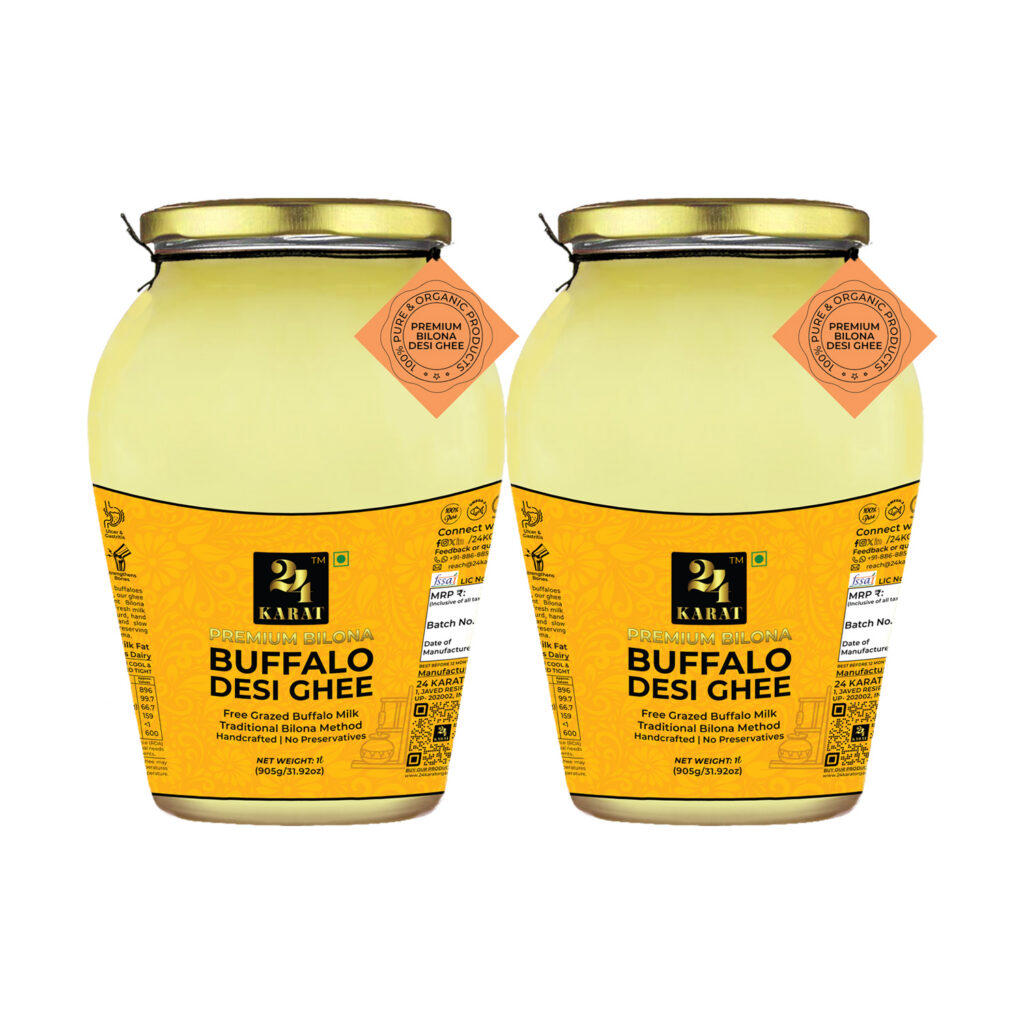
Choosing a Ghee Jar Size for the Way You Cook
Compare ghee pack sizes using household cooking habits, declared quantity and current unit value instead of assuming the largest jar is always best.
THE CRAFT BEHIND THE JAR
Keep the questions clear.
Explore the complete bilona process or find a straight answer in our FAQ collection.