
Kitchen knowledge
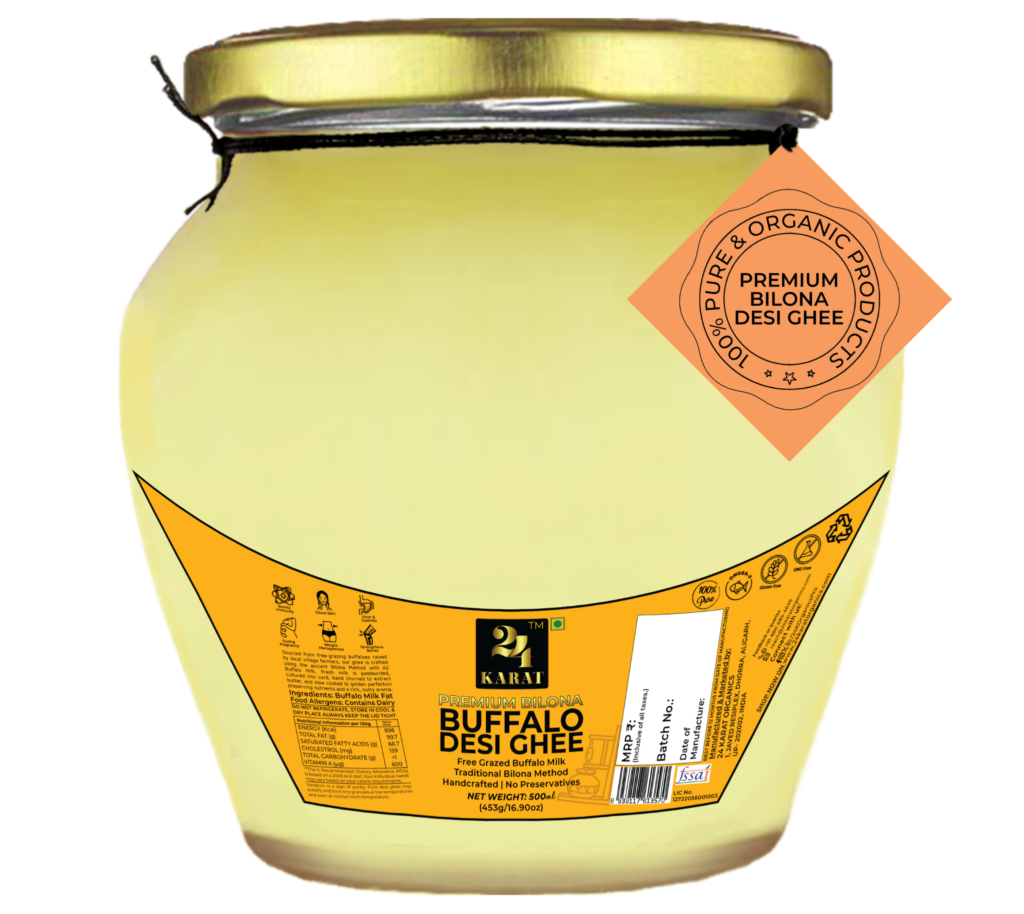
Why Buffalo Ghee Can Be White or Ivory
Understand the pale colour of buffalo ghee, how melting changes its appearance and why colour is not a reliable shortcut for judging purity.
24 KARAT product image
IN THIS JOURNAL
01 Colour begins with the milk fat
02 Solid and melted can look different
03 Compare batches with context
A pale jar can surprise someone who grew up expecting ghee to be yellow. Buffalo ghee often sets white or ivory, while cow ghee commonly looks more yellow. Those appearances are useful descriptions, but they are not a simple ranking of quality. Understanding the milk source and the physical state of the fat is a better starting point.
01
Colour begins with the milk fat
The milk source influences the natural appearance of the fat. Buffalo milk fat is low in the yellow pigment beta-carotene, which helps explain a pale or ivory set. Cow ghee commonly has a yellower appearance. A breed name, an animal name and a colour description still answer different questions from the ingredients, production method and evidence for a particular jar.
02
Solid and melted can look different
A set jar scatters light differently from melted fat, so white-looking ghee can appear clearer or more golden when warmed. That change does not mean a colour has been added between the cupboard and the pan. Temperature and the way the fat sets affect what you see. Lighting and camera exposure also make online photographs an imperfect standard for comparing a product at home.
03
Compare batches with context
Natural shade can vary with the milk, feed and season, as well as production and storage conditions. A slightly creamier appearance in one batch does not on its own establish a defect. At the same time, unusual grey or green off-tints should not be presented as a special premium characteristic. Describe a concern clearly and keep the label and batch details if a jar needs checking.
04
Avoid the yellow-equals-pure shortcut
Deep colour cannot prove authenticity, and white ghee is not automatically diluted or bleached. Appearance also cannot establish an exact vitamin value. Use the product’s ingredient declaration and nutrition information for what is declared, and relevant analysis for what was tested. A colour preference is valid as a preference; it should not be mistaken for a complete laboratory test.
05
Choose for the dish and the product
Buffalo ghee can be used in familiar dishes including dal, rotis, rice and sweets. Its pale set does not prevent it from contributing aroma and richness to cooking. When comparing cow and buffalo products, consider the declared source, flavour, method and documentation. That gives you a more useful basis for a choice than treating every jar as a competition for the deepest yellow.
TAKE IT INTO THE KITCHEN
A few things to remember
- Consider the declared milk source and whether the ghee is set or melted.
- Allow for lighting and normal batch variation.
- Do not use colour to infer purity or exact vitamin levels.
KEEP EXPLORING
The next page in the journal.
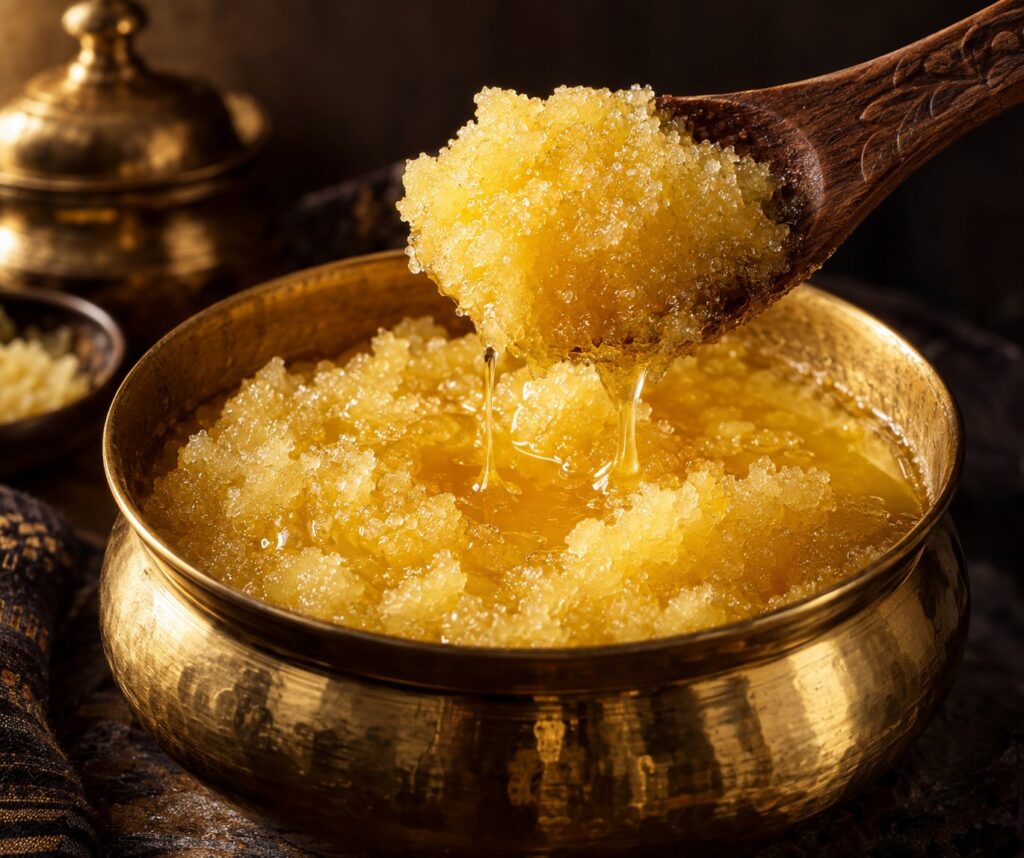
Why Ghee Turns Grainy, Smooth or Liquid with Temperature
Learn why ghee texture changes with cooling and storage temperature, and why grain, firmness or melting alone cannot prove purity.
Reading Ghee Nutrition Information Without the Hype
Learn how to compare ghee nutrition panels, serving sizes and general composition without inventing vitamin values or health promises.
Ghee Traceability: What a Batch Record Can Tell You
Understand ghee traceability, batch records and the questions that connect a finished jar to its ingredients, process and supporting information.
THE CRAFT BEHIND THE JAR
Keep the questions clear.
Explore the complete bilona process or find a straight answer in our FAQ collection.