
Process & craft
The Curd Culture Step Before Bilona Ghee
Understand the role of a curd starter in bilona ghee, why milk is set into dahi and how cultured flavour differs from a sour finished jar.
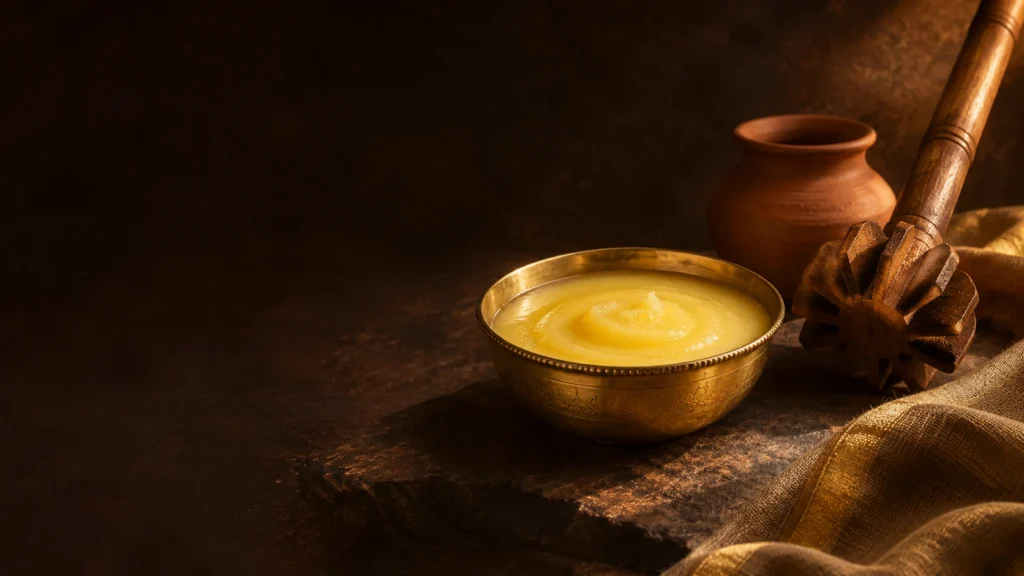
Editorial illustration; not a documentary photograph of a specific 24 KARAT farm or batch.
IN THIS JOURNAL
Before the churn and the simmer, there is a quieter step: setting the milk into curd. A curd starter introduces the culture used to make dahi, which becomes the starting point for cultured butter. This stage is easy to overlook in a story focused on the final golden liquid, but it helps explain what whole-curd bilona means.
01
What a starter is doing
A curd starter is added to prepared, cooled milk so it can set into dahi. The culture step is deliberate, rather than a collection of unrelated layers of malai saved over several days. It establishes the cultured starting material that will be churned. That is why asking whether a producer sets and churns the whole curd can be more informative than asking only whether a churner appears in a photograph.
02
Preparation still matters
Milk preparation, cooling and clean handling remain part of the method. The starter is not a substitute for those steps. In 24 KARAT’s described process, pasteurisation and cooling come before curd-setting. The stages work together: the starting milk is prepared, the culture is added, and the set curd then moves into churning. Each stage needs its own clear description.
03
Cultured does not mean the jar should taste off
Culturing shapes the character of the curd and butter. Clarification later develops the cooked-dairy, nutty aroma associated with ghee. A sharply sour, rancid or otherwise off-smelling finished product should not be excused simply because curd was used at the beginning. If a jar seems abnormal, keep its batch details and ask for help with the specific observation.
04
Keep claims in proportion
A fermentation step in the starting material does not automatically make finished ghee a probiotic product or a treatment. Ghee is primarily the clarified milk-fat fraction, and statements about the original milk or curd should not be turned into guarantees about the finished jar. The useful story here is culinary and procedural: what was set, what was churned and how the butter was finished.
05
Read the whole sequence
The culture step makes most sense alongside the stages on either side. Milk comes before dahi; makhan and buttermilk separate during churning; clarification follows. Learning that sequence gives a familiar ingredient a clearer identity. You can then compare process descriptions and ask focused questions without relying on vague words such as “natural” to explain every part of production.
TAKE IT INTO THE KITCHEN
A few things to remember
- Look for a clear milk-to-dahi-to-makhan sequence.
- Do not confuse cultured starting material with a medical or probiotic promise.
- Check an off-smelling finished jar rather than dismissing the concern.
KEEP EXPLORING
The next page in the journal.
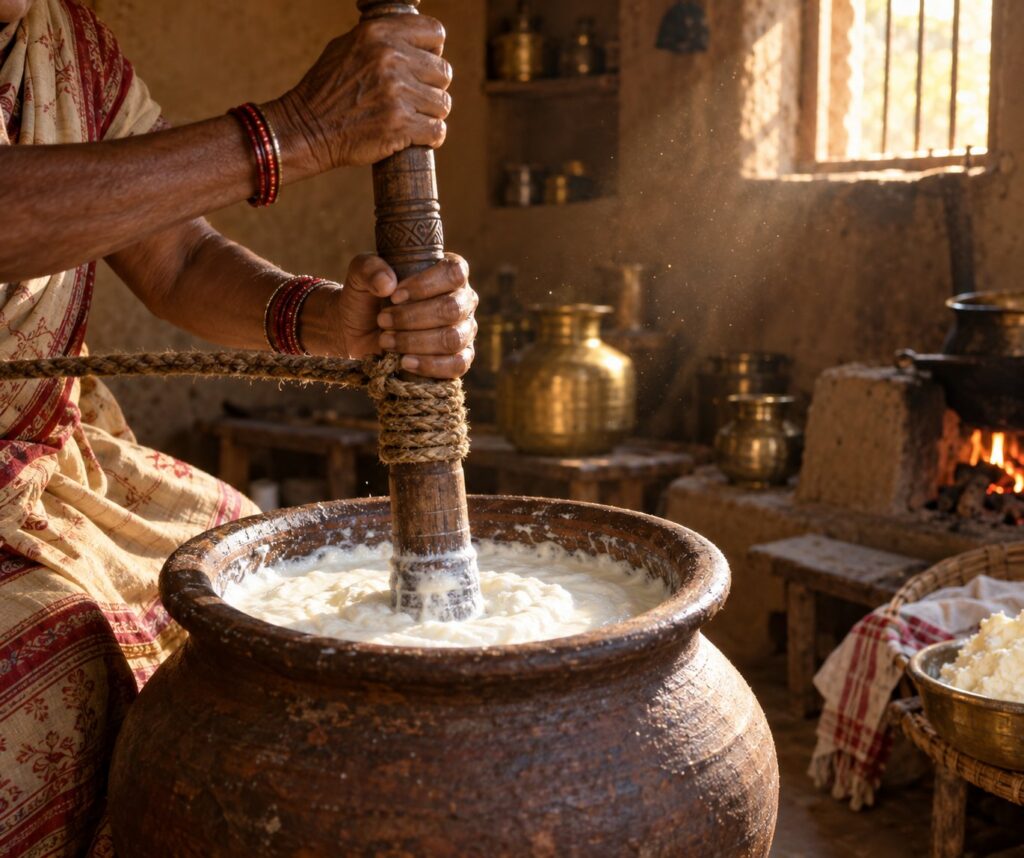
Why Whole Curd Matters in the Bilona Ghee Method
Follow the whole-curd bilona pathway from milk to dahi, makhan and ghee, and understand how it differs from collected-cream methods.
Makhan and Buttermilk: The Middle of the Bilona Story
Discover how churning whole curd separates makhan and buttermilk, and why cultured butter is the link between dahi and clarified ghee.
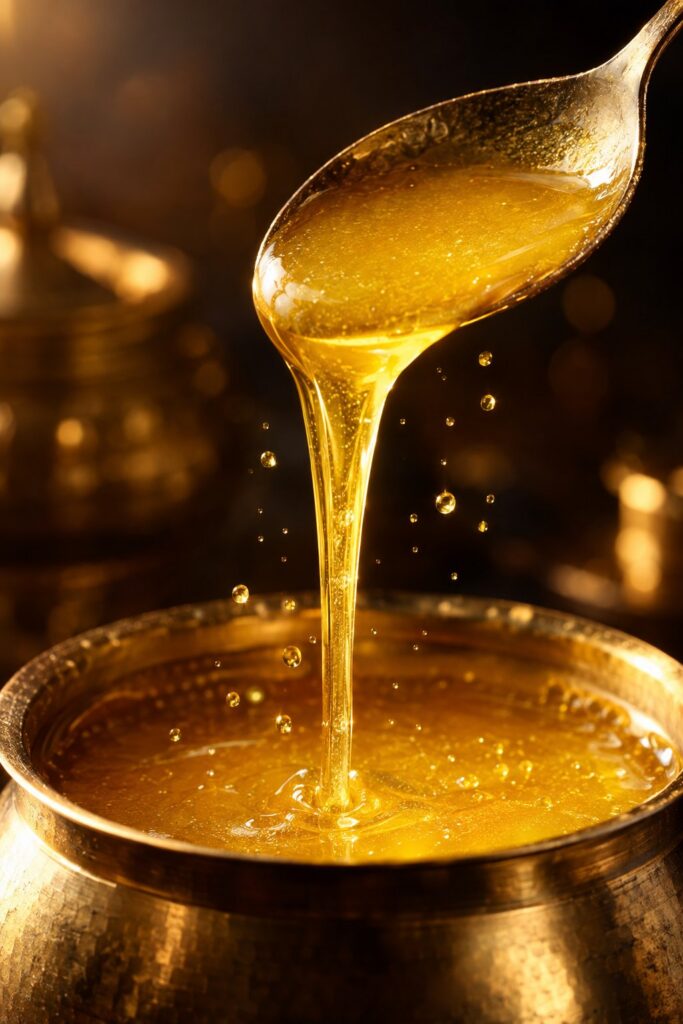
Where Ghee Gets Its Nutty Aroma During Clarification
Explore how culturing and clarification shape ghee aroma, why warming changes what you smell and how to distinguish preference from an off odour.
THE CRAFT BEHIND THE JAR
Keep the questions clear.
Explore the complete bilona process or find a straight answer in our FAQ collection.