
Process & craft
Why Whole Curd Matters in the Bilona Ghee Method
Follow the whole-curd bilona pathway from milk to dahi, makhan and ghee, and understand how it differs from collected-cream methods.
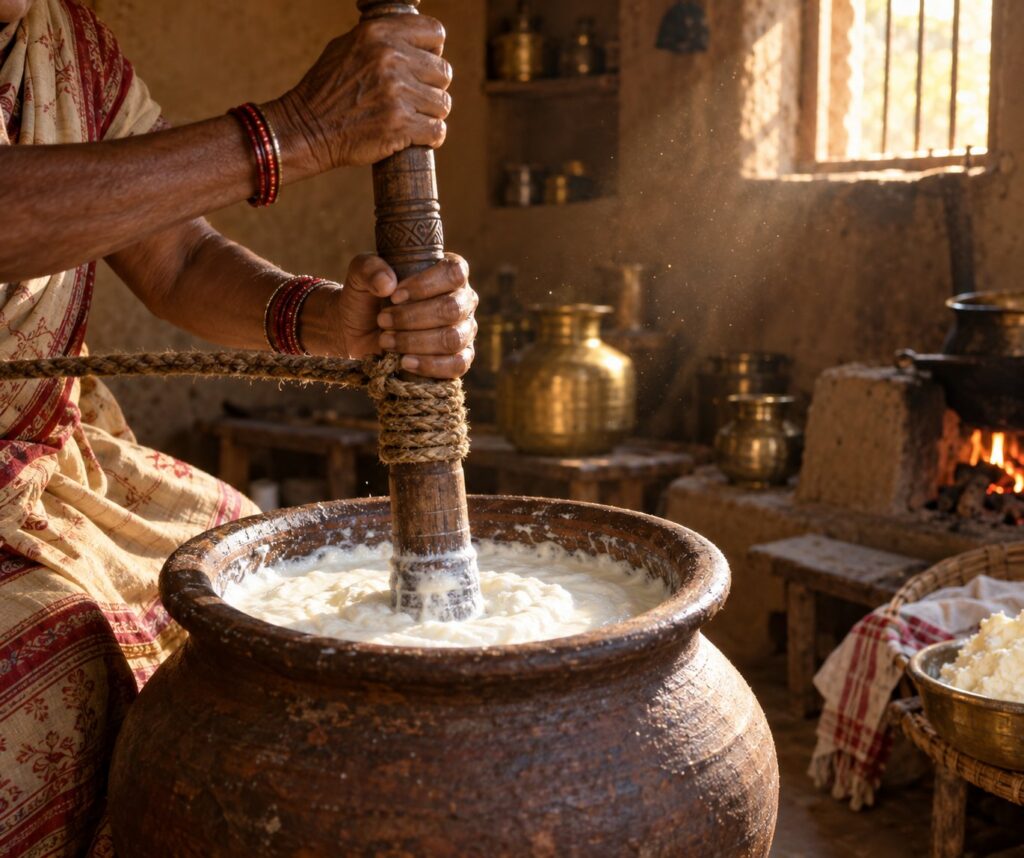
Editorial illustration; not a documentary photograph of a specific 24 KARAT farm or batch.
The word bilona is easier to understand when you follow the starting material. In the whole-curd pathway, milk is set into dahi, that curd is churned into cultured butter, and the butter is clarified into ghee. The sequence matters more than a rustic setting or the appearance of a churner. It tells you what is being transformed at each stage.
01
Begin before the churn
Prepared milk is cooled to a suitable point for adding a curd starter, then allowed to set into dahi. This creates the cultured starting point for the butter. It is a different approach from collecting the layer of cream or malai from milk over time. Both routes can produce genuine dairy ghee when properly made, but they should be described accurately rather than treated as interchangeable processes.
02
Churn the whole set curd
Churning brings the fat together into makhan while buttermilk separates. In the whole-curd bilona method, the material going into this stage is the set dahi, not just accumulated cream. Asking what is churned is therefore a useful way to understand a producer’s use of the term. The colour of the finished ghee cannot answer that process question on its own.
03
Give the butter its own stage
Makhan is the link between the fermented curd and clarified fat. Its cultured character contributes to the starting flavour of the ghee. During clarification, water is driven off and milk solids separate while cooked-dairy and nutty notes develop. The finished product is then cooled, filtered and packed. Each stage has a purpose; the story is more informative when those purposes are explained plainly.
04
Ask about equipment honestly
A wooden mathani is part of the visual language of bilona, but equipment alone does not establish authenticity. A producer should be clear about hand-churning or any machine assistance used. Small batches can support attentive handling, yet a small-batch label is still a claim that deserves a factual explanation. The method is defined by the curd-to-butter route, supported by the records and practices behind it.
05
Carry the distinction into your choice
Understanding the route helps you compare products without dismissing every other kind of ghee. Ask about the milk source, what is cultured, what is churned and which information supports the finished product. Then choose for the flavour and cooking role you prefer. A traditional method can be part of a food’s identity without becoming a medical claim or a promise that appearance proves purity.
TAKE IT INTO THE KITCHEN
A few things to remember
- Ask whether whole dahi or collected cream is churned.
- Distinguish process claims from equipment imagery.
- Use the finished label and relevant evidence alongside the method description.
KEEP EXPLORING
The next page in the journal.
The Curd Culture Step Before Bilona Ghee
Understand the role of a curd starter in bilona ghee, why milk is set into dahi and how cultured flavour differs from a sour finished jar.
Makhan and Buttermilk: The Middle of the Bilona Story
Discover how churning whole curd separates makhan and buttermilk, and why cultured butter is the link between dahi and clarified ghee.
Where Ghee Gets Its Nutty Aroma During Clarification
Explore how culturing and clarification shape ghee aroma, why warming changes what you smell and how to distinguish preference from an off odour.
THE CRAFT BEHIND THE JAR
Keep the questions clear.
Explore the complete bilona process or find a straight answer in our FAQ collection.