
Process & craft
Where Ghee Gets Its Nutty Aroma During Clarification
Explore how culturing and clarification shape ghee aroma, why warming changes what you smell and how to distinguish preference from an off odour.
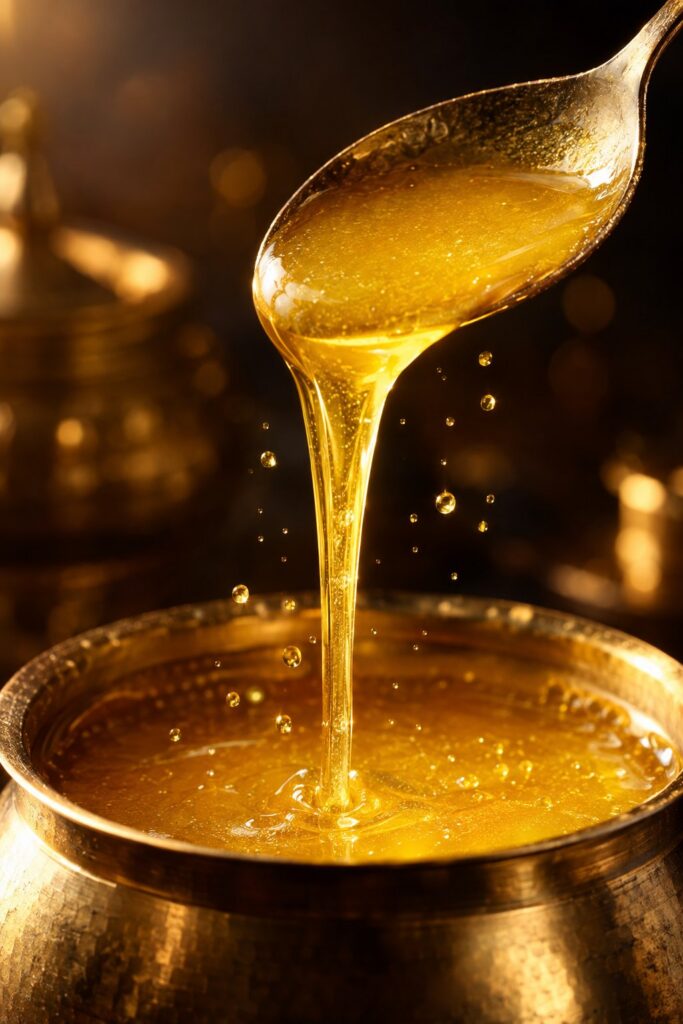
Editorial illustration; not a documentary photograph of a specific 24 KARAT farm or batch.
IN THIS JOURNAL
01 Flavour starts before the simmer
02 Clarification develops cooked notes
03 Warming changes what reaches your nose
The aroma of warm ghee can make a small spoonful noticeable in a whole dish. That character is connected to both the cultured starting material and the work of clarification. Understanding those stages helps explain why two jars need not smell identical, and why aroma is valuable as a cooking experience without becoming a standalone purity test.
01
Flavour starts before the simmer
In the whole-curd route, milk is set into dahi and churned into cultured butter. That sequence contributes to the starting character of the butter before it is clarified. It is one reason the method is described as curd-first. The final aroma is not explained by a single word on a label; it belongs to the sequence of ingredients, culturing and finishing.
02
Clarification develops cooked notes
During clarification, moisture is removed and milk solids separate while toasted, cooked-dairy and nutty notes develop. Attentive heat control matters because a pleasing roasted character is different from scorching. A fixed temperature quoted without context cannot replace a clear description of the process. It is more useful to understand what the stage is doing than to assume every batch follows an identical timer.
03
Warming changes what reaches your nose
Warmth releases more of the volatile aroma compounds, so a spoon in a warm pan can seem more aromatic than ghee straight from a cool cupboard. Air exposure and time can also soften the aroma. Keep the jar closed and store it according to its directions. A stronger smell is not automatically a better product, just as a clean, mild aroma is not automatically a defect.
04
Allow room for natural differences
Milk, feed, season, culturing and finishing can influence sensory character. A batch can therefore differ a little in intensity or shade without that observation proving a problem. Compare like with like where possible: similar temperature, the same dish and a similar amount. Personal preference matters too; one kitchen may enjoy a pronounced dairy note while another prefers a smaller finishing spoonful.
05
Recognise the limits of a sensory check
A pleasant aroma does not establish the complete composition of a jar. Equally, sharply sour, rancid or paint-like odours should not be excused as “traditional character.” For an abnormal jar, retain the product and batch information and contact the team. For choosing a cooking amount, start with the recipe and your taste rather than assuming that more aroma requires a larger serving.
TAKE IT INTO THE KITCHEN
A few things to remember
- Notice whether you are comparing warm or cool ghee.
- Distinguish a flavour preference from an abnormal off odour.
- Use relevant evidence for composition questions, not aroma alone.
KEEP EXPLORING
The next page in the journal.
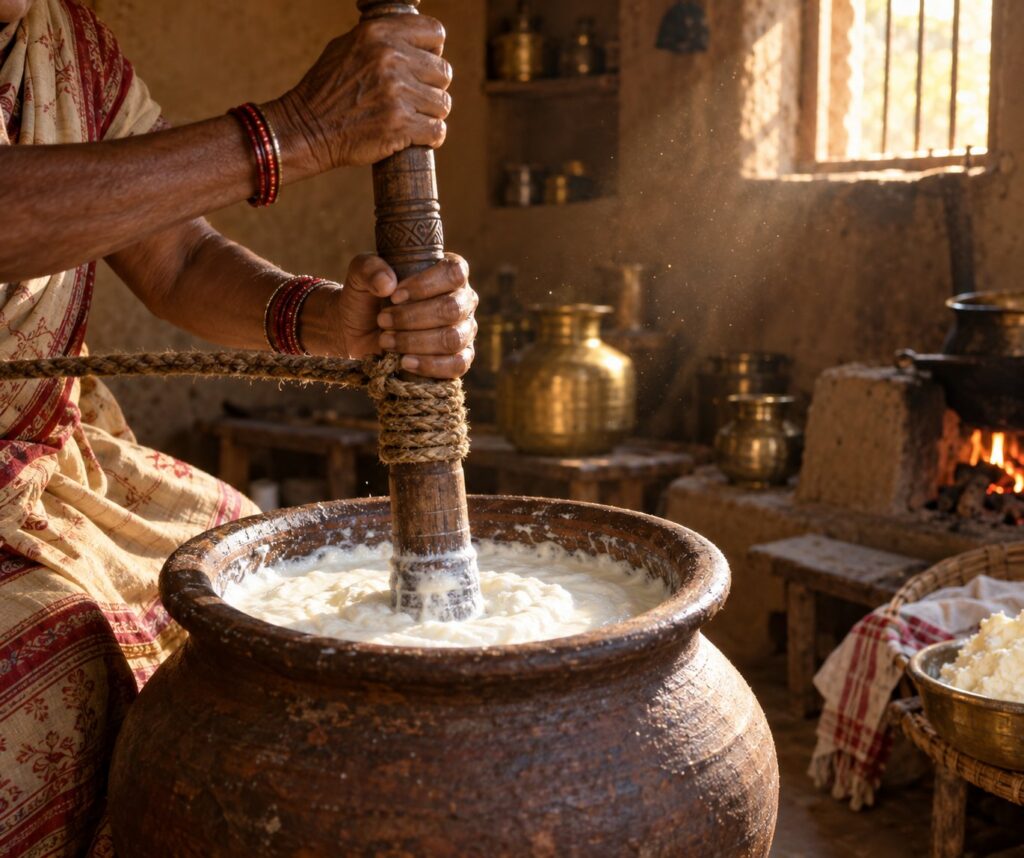
Why Whole Curd Matters in the Bilona Ghee Method
Follow the whole-curd bilona pathway from milk to dahi, makhan and ghee, and understand how it differs from collected-cream methods.
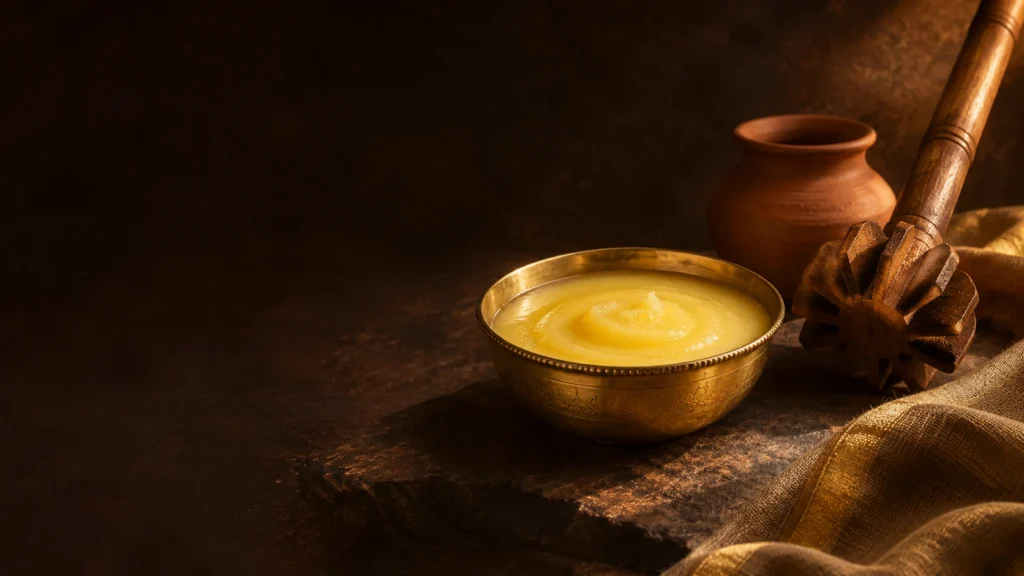
The Curd Culture Step Before Bilona Ghee
Understand the role of a curd starter in bilona ghee, why milk is set into dahi and how cultured flavour differs from a sour finished jar.
Makhan and Buttermilk: The Middle of the Bilona Story
Discover how churning whole curd separates makhan and buttermilk, and why cultured butter is the link between dahi and clarified ghee.
THE CRAFT BEHIND THE JAR
Keep the questions clear.
Explore the complete bilona process or find a straight answer in our FAQ collection.