
Sourcing & records
From Milk Collection to Curd: Questions Worth Asking
Explore the practical questions behind milk collection, clean handling and preparation for curd without confusing farm imagery with evidence.
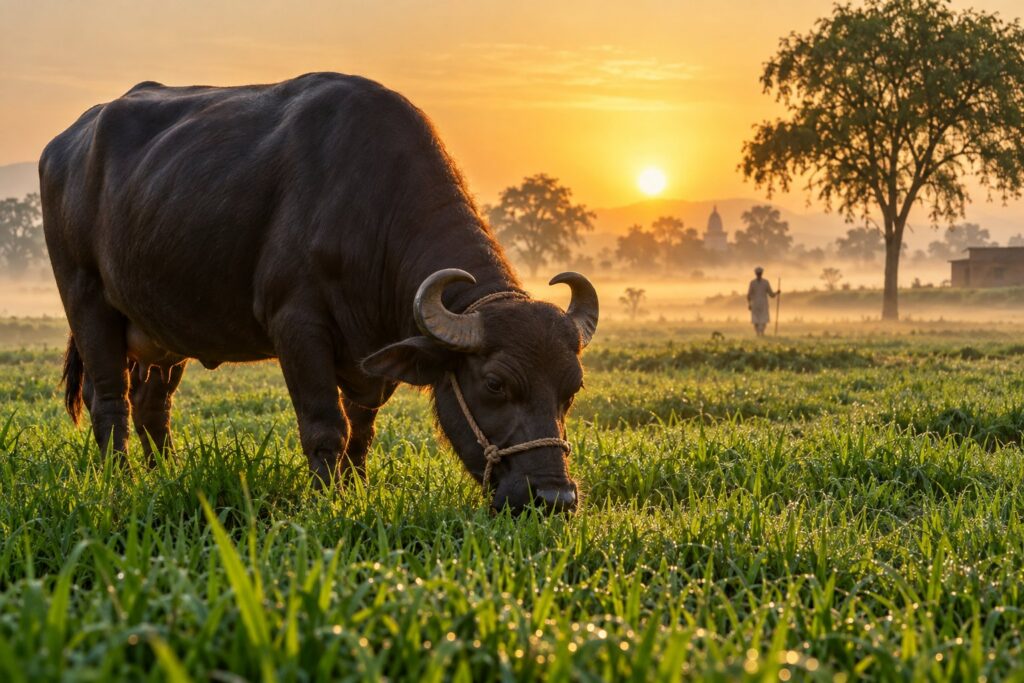
Editorial illustration; not a documentary photograph of a specific 24 KARAT farm or batch.
IN THIS JOURNAL
01 Identify the declared source
03 Look at preparation before culturing
The first stage of a ghee story is often represented by a farm photograph. A picture can introduce a setting, but it cannot explain the handling of a particular batch of milk. Better questions look at collection, the declared milk source and the steps before culturing. This is an educational look at those questions, rather than a report of a visit to a specific farm.
01
Identify the declared source
Start with the animal and milk source described for the actual product. Murrah identifies a buffalo breed; it is not a description of a churning method or an organic certificate. Ask for a clear explanation of the source relevant to the jar you are considering. A breed name can be useful information, but it does not by itself establish the exact nutrient composition of a particular batch.
02
Ask about clean collection
Hand-milking is part of 24 KARAT’s described sourcing approach. The meaningful conversation includes clean collection and handling, rather than treating the word “hand” as a complete quality test. What happens to the milk after collection matters too. The finished ghee is several stages away from the milking vessel, so collection should be understood as one part of a connected process.
03
Look at preparation before culturing
In the process described for this ghee, milk is pasteurised and cooled before a starter is added to set curd. This preparation stage belongs within the manufacturing story. Traditional food-making and controlled preparation do not need to be presented as opposites. Ask how the milk reaches the curd-setting stage, rather than assuming that a traditional label means every form of heat treatment is absent.
04
Keep animal care claims specific
Responsible animal care is an important topic, but a general scene does not verify a feeding programme, a particular farm or a certification. If a claim such as grass-fed or organic affects your choice, ask what documentation supports that exact claim. Avoid borrowing a description from another brand or assuming that every picture on a website is a photograph of the producer’s own animals.
05
Connect the beginning to the finished jar
Collection questions are most useful when they lead to the product and batch you can actually identify. Keep the discussion grounded in the declared ingredients, method and available records. This makes the beginning of the story understandable without turning a farm image into a trust badge. It also leaves room for a producer to explain what is documented and what still needs checking.
TAKE IT INTO THE KITCHEN
A few things to remember
- Separate breed, method, feed and certification terms.
- Ask how collection connects to curd preparation.
- Use imagery as context and documentation for specific claims.
KEEP EXPLORING
The next page in the journal.
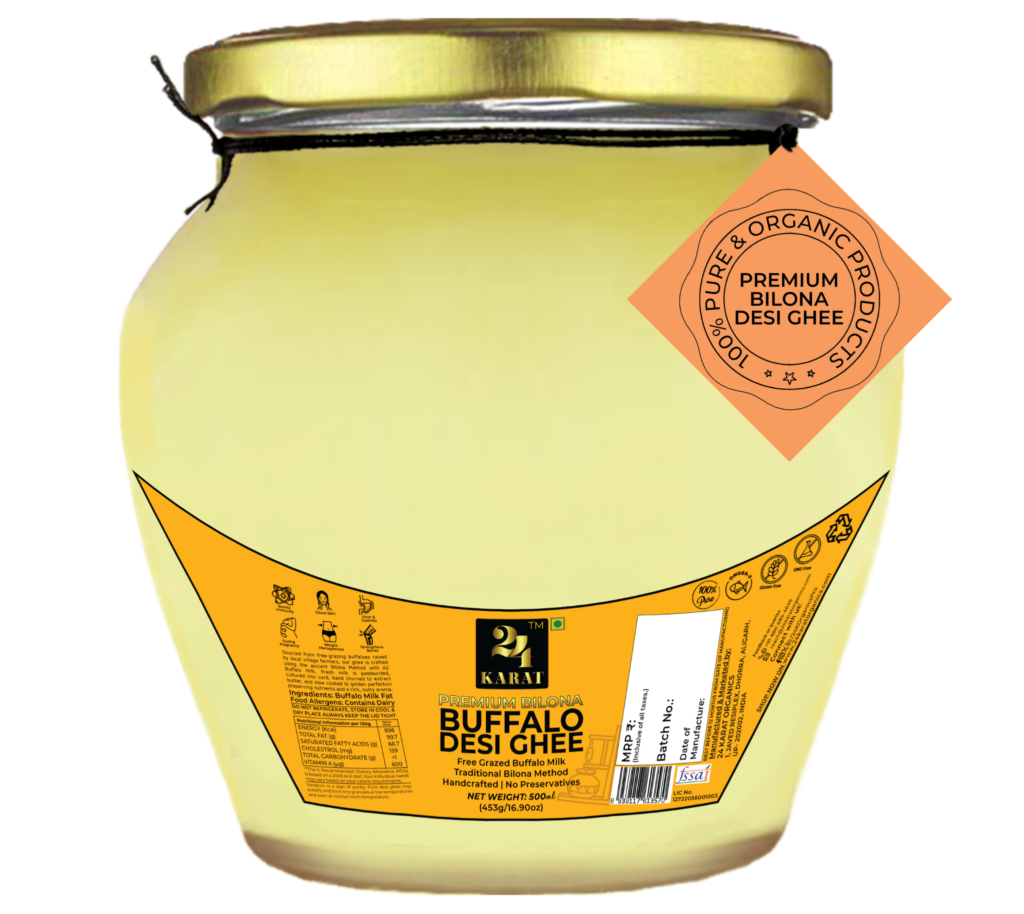
Ghee Traceability: What a Batch Record Can Tell You
Understand ghee traceability, batch records and the questions that connect a finished jar to its ingredients, process and supporting information.
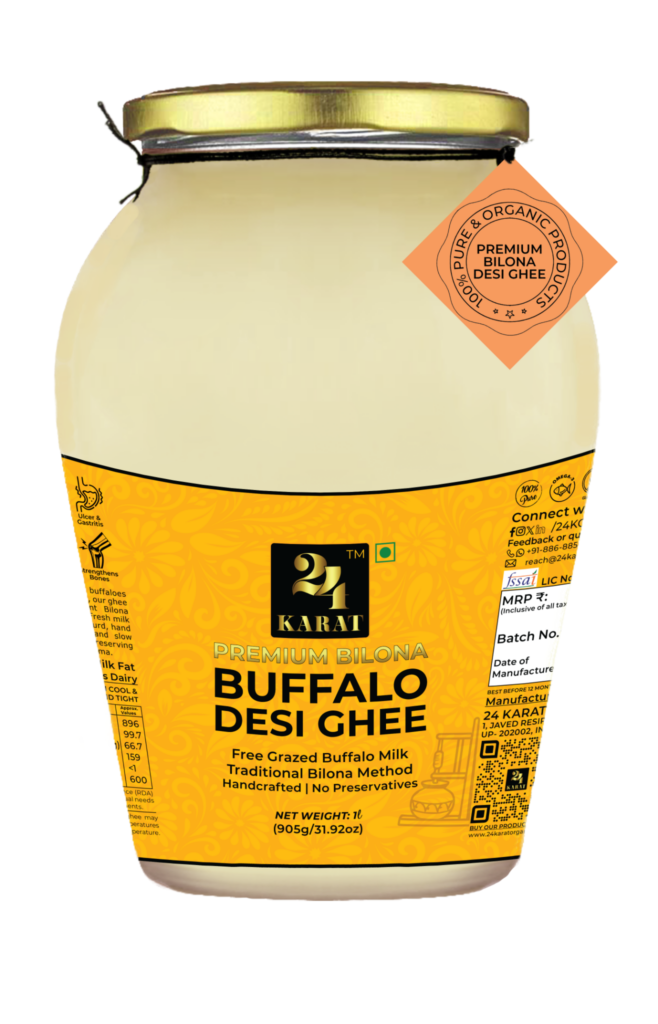
How to Read a Ghee Label Before Opening the Jar
A practical guide to reading a ghee label: ingredients, net quantity, batch details, dates, storage directions and the questions to ask next.
What to Look for in a Ghee Laboratory Report
Learn how to match a ghee laboratory report to a product and batch, read its test scope and avoid treating one result as proof of every claim.
THE CRAFT BEHIND THE JAR
Keep the questions clear.
Explore the complete bilona process or find a straight answer in our FAQ collection.