
THE BILONA WAY
Before the gold,
there is the churn.
From fresh Murrah buffalo milk to cultured curd, from makhan to the finished jar — follow every stage of the 24 KARAT bilona process.
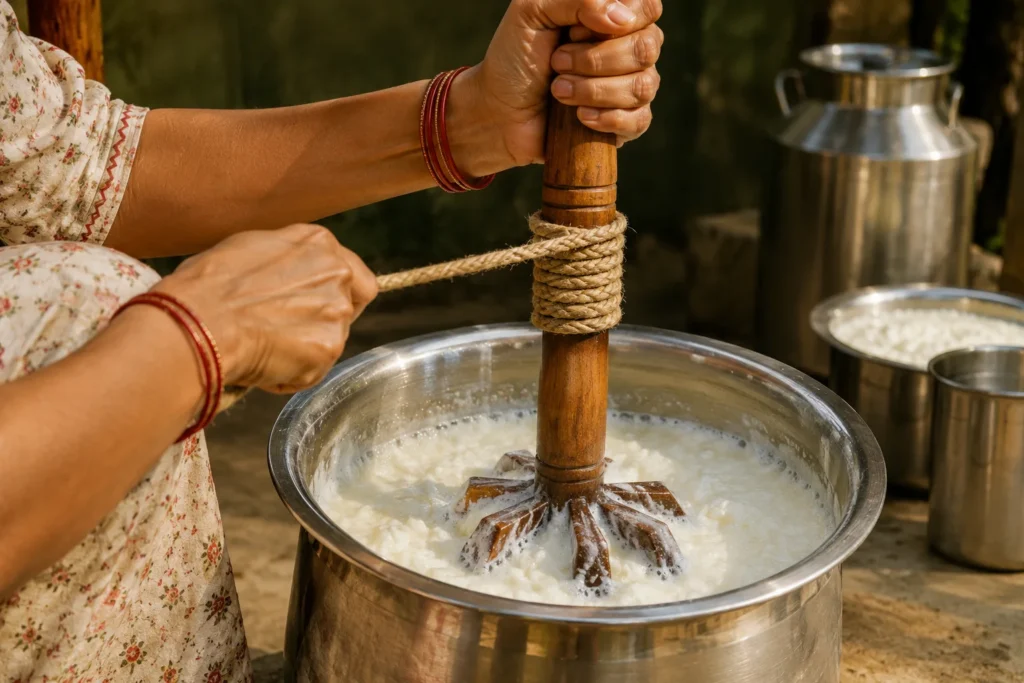
THE PATH THAT DEFINES BILONA
Milk. Curd. Butter. Ghee.
The defining step is churning the whole fermented curd to obtain butter. The equipment alone, the colour of the ghee or the size of its grains does not establish the bilona method.
01
Milk
Hand-milked Murrah buffalo milk
02
Curd
Heated, cooled and cultured into dahi
03
Butter
Whole-curd churning separates makhan
04
Ghee
Slow clarification, cooling and filtering
FOLLOW THE EIGHT STAGES
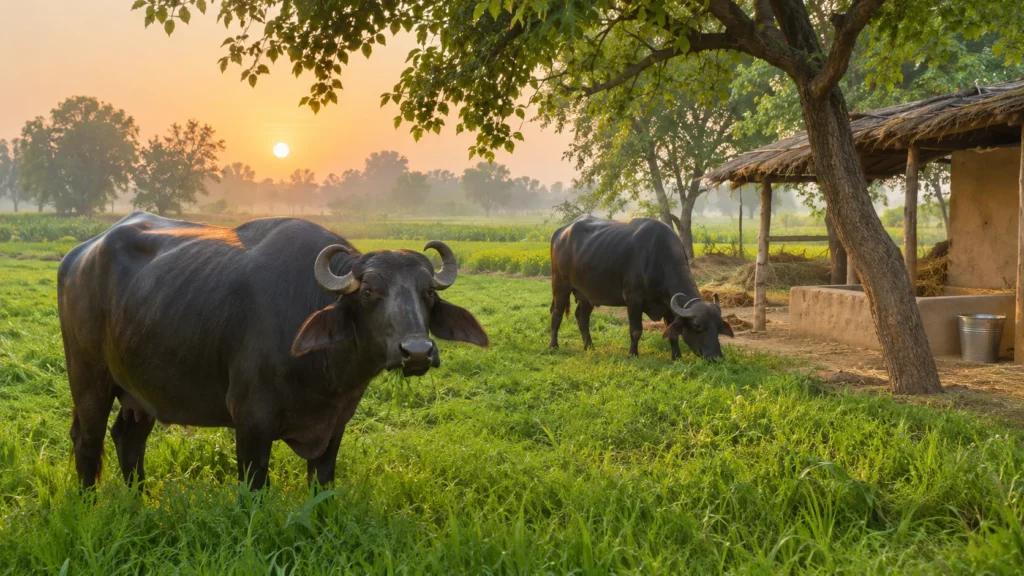
STAGE 01 · HAND-MILKING & HYGIENIC COLLECTION
It begins with the milk.
Our process starts with hand-milked Murrah buffalo milk. Care at collection matters: clean handling and suitable vessels help protect the milk before it enters the dairy process.
The milk is the raw material for the entire journey. It will be heated and cultured as a whole-milk starting point, rather than following a direct cream-to-ghee route.
What moves forward
Fresh buffalo milk, ready for heat treatment.
STAGE 02 · PASTEURISATION BEFORE CULTURING
Gentle heat. A careful cool.
The milk is pasteurised before the curd is set. This hygienic heat-treatment stage is part of the process described in our production handbook. It is followed by cooling to a suitable temperature for the starter culture.
Heating and culturing are separate steps. The culture is added after the milk has cooled sufficiently; adding it while the milk is too hot can prevent it from working as intended.
Why this stage matters
Heat treatment and controlled cooling prepare the milk for curd-setting.
STAGE 03 · STARTER CULTURE & CURD-SETTING
First, we make dahi.
A curd starter is added to the prepared milk and the milk is allowed to set into thick dahi. Fermentation develops the cultured starting point that distinguishes this pathway.
Setting takes time, and its progress depends on conditions such as temperature and culture activity. We describe the stage by what it achieves — properly set curd — rather than promising an identical clock time for every batch.
What moves forward
Whole set curd, not a layer of skimmed malai.
THE TRANSFORMATION
01
MILK + STARTER
02
TIME TO CULTURE
03
WHOLE SET DAHI
A process explained — no batch timing is implied.
STAGE 04 · SMALL-BATCH CURD-CHURNING
The whole curd meets the bilona.
The whole set curd is churned in small batches. The churning action brings fat together into butter while the liquid portion separates as buttermilk, or chaas.
This is the heart of bilona: the butter comes from fermented curd. A wooden mathani is associated with the traditional method, but the curd-to-butter pathway is what defines the process.
Two outputs from one churn
Makhan continues to the ghee stage. Buttermilk separates during churning.
STAGE 05 · COLLECTING THE CULTURED BUTTER
Makhan, gathered for the next stage.
The butter separated during churning is collected. This cultured butter, known as makhan, is the material that will be clarified into ghee.
The distinction is simple but important: the churn does not directly produce the finished ghee. It first gives us butter; clarification is a separate transformation.
What moves forward
Cultured butter from whole curd, ready for slow simmering.
THE TRANSFORMATION
01
WHOLE CURD
02
BILONA CHURN
03
MAKHAN + CHAAS
A process explained — no batch timing is implied.
STAGE 06 · SLOW SIMMERING & CLARIFICATION
Where butter becomes ghee.
The makhan is heated and slow-simmered. As clarification progresses, water evaporates and milk solids separate from the fat. This stage develops the characteristic cooked-dairy, nutty aroma associated with ghee.
Careful attention to the progress of clarification matters more than an unverified fixed temperature or timer. The aim is to develop the ghee without scorching the milk solids.
What changes
Butter becomes clarified milk fat with a developed aroma.
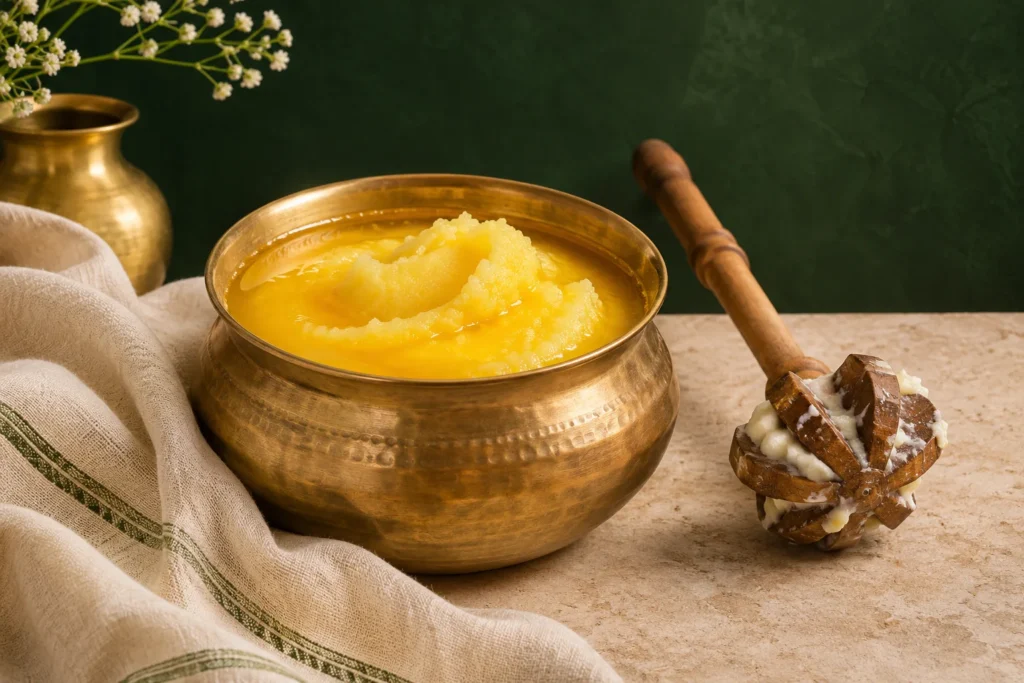
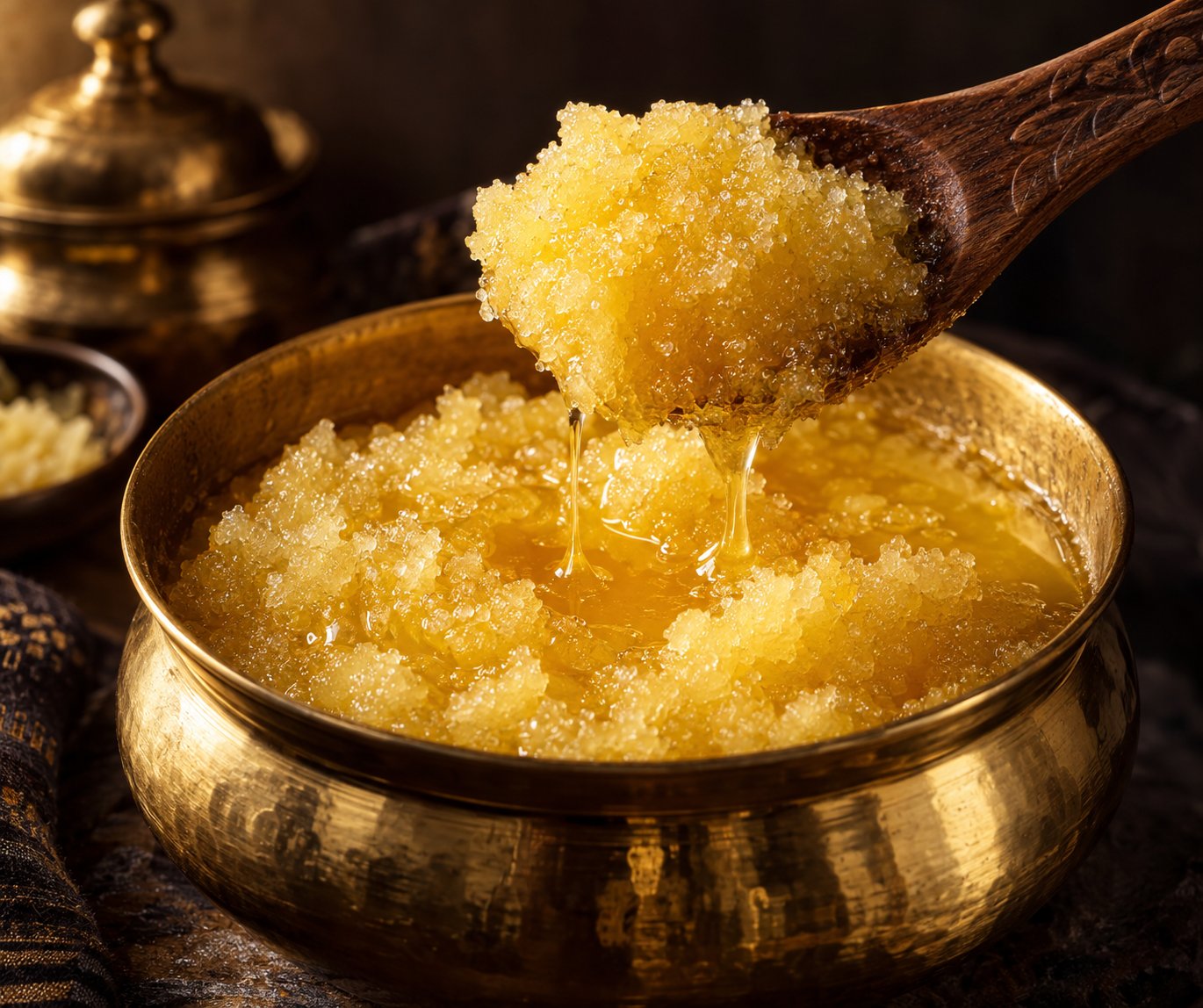
STAGE 07 · COOLING & CRYSTALLISATION
A natural texture takes shape.
After clarification, the ghee is allowed to cool. Milk fat contains components that set at different temperatures, so the cooling history influences the final texture.
A jar may be grainy, smooth, firm or partly liquid in different conditions. Grain size can vary naturally. Texture alone is not proof of purity, nor does a smooth jar rule out the bilona method.
What you may notice
A changing set as the ghee cools or the weather warms.
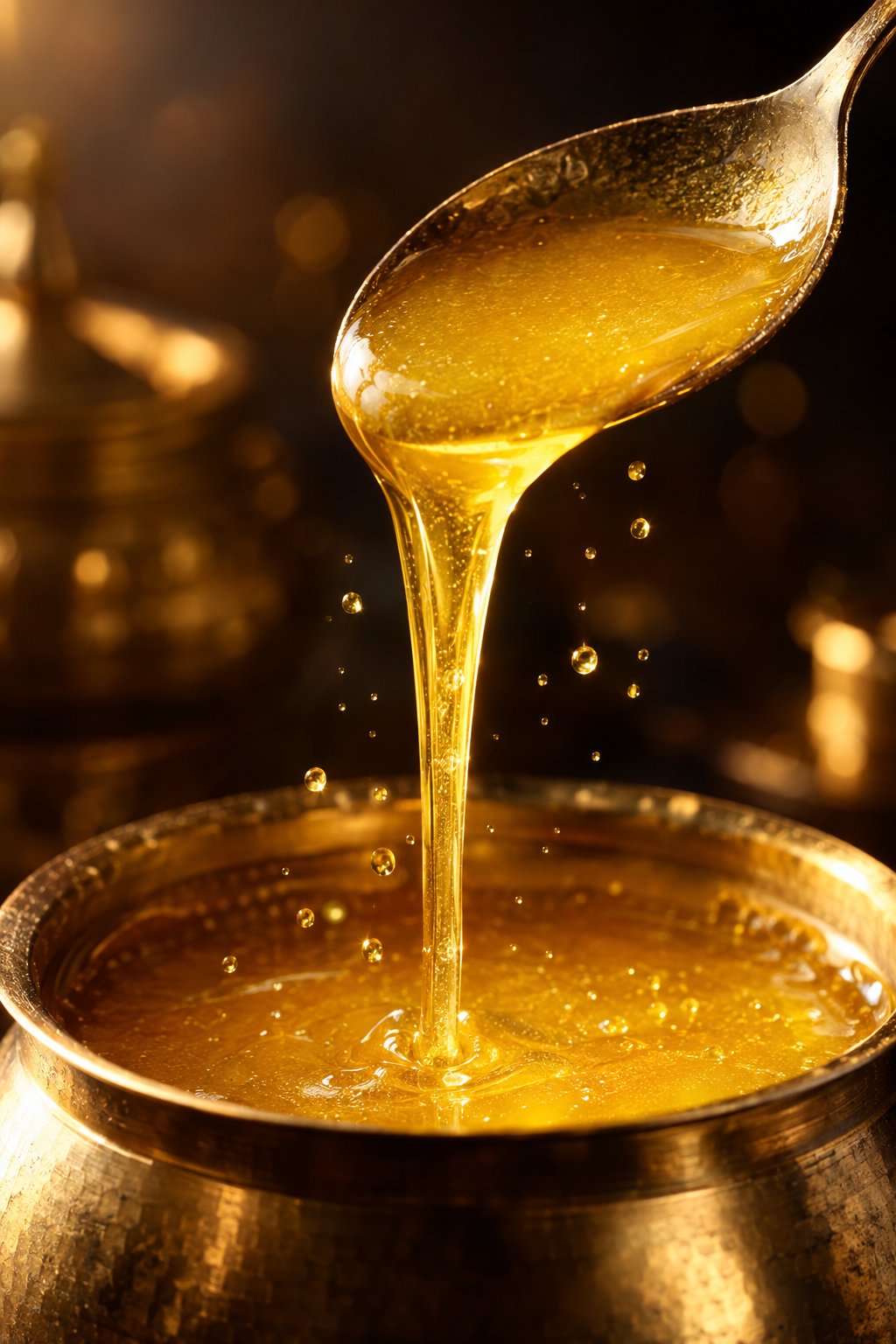
STAGE 08 · FILTERING, CAREFUL PACKING & STORAGE
Filtered. Packed. Ready for your kitchen.
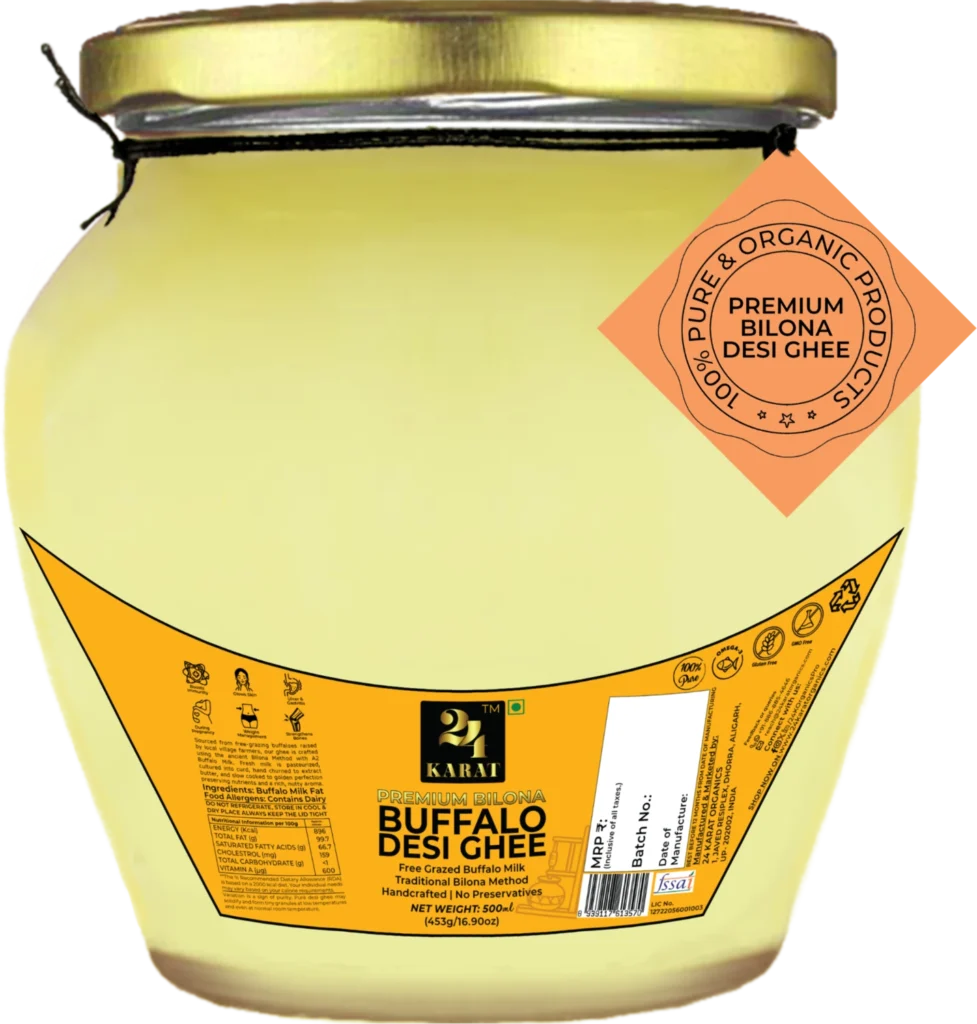
After cooling, the ghee is filtered to remove residual milk solids and packed with care. The production handbook specifies no added preservatives.
The finished jar carries the product information you should check: its ingredient declaration, batch details, storage instructions and best-before date. For supporting documentation, match any report to the relevant product and batch.
After opening
Keep the lid closed, use a clean dry spoon and follow the storage directions on your pack.
THE DETAILS
A method with a clear identity.
The curd route
Milk → cultured curd → churned butter → ghee. Fermentation and whole-curd churning are part of the pathway.
The cream route
Milk → separated cream or creamery butter → ghee. It follows a different starting route; that alone does not establish adulteration or poor quality.
What deserves separate proof
Bilona describes a process. Organic certification, milk-composition claims and purity need their own supporting records and relevant testing.
QUESTIONS WORTH ASKING
Know the method. Understand your jar.
Is every desi ghee bilona?
The words describe different things. Ask whether the producer starts with cultured whole curd or separated cream. Our described pathway is milk → curd → butter → ghee.
Do you pasteurise the milk?
Yes. Our production handbook includes pasteurisation before curd-setting. The milk is then cooled and cultured into dahi before churning.
Does bilona mean A2 or organic?
No. Bilona describes the process. Breed, milk composition and organic certification are separate matters that need appropriate evidence.
What happens to the buttermilk?
Buttermilk, or chaas, separates as butter is obtained during churning. The collected makhan is the part that continues into ghee clarification.
How long does the whole process take?
Curd-setting, churning, clarification and cooling each take time. The handbook describes a cycle of about a day or more, with timing depending on the batch and conditions. This is not a delivery or batch-completion promise.
Why can texture vary?
Cooling, storage temperature and the fat composition can change crystallisation. Graininess alone does not prove quality, and a smooth texture alone does not indicate adulteration.
Does the process prove purity?
No single process description or home texture test proves purity. Ingredients, traceable production records and appropriate laboratory tests provide different kinds of information. Contact us with your batch details if you need supporting documentation.
FROM OUR PROCESS TO YOUR TABLE
Bring a little gold to your table.
Explore the existing jars, choose your pack size and see current availability.